A year after the devastating fires that turned large forest areas of Monte Verde to ash, leaders, forest monitors, volunteer fire brigades from the Indigenous Chiquitano territory, and civil society organisations gathered in Santa Cruz de la Sierra, Bolivia.
They met for a workshop to reflect on their experiences protecting the territory against illegal forest activities and, not least, the wildfires of 2024 and previous years — all with the aim of standing stronger in the future.
Across the groups, there was a clear agreement: without better data, stronger collaboration, and clearer procedures, Monte Verde will remain just as vulnerable the next time the flames return.
And this is precisely the core of the more4nature approach: connecting community-based monitoring, data sharing, and cross-institutional cooperation to strengthen local action and the protection of the forest.

more4nature
more4nature is a Horizon Europe project on citizen science that strengthens the role of citizens and local communities in environmental protection by integrating citizen-generated data into monitoring, decision-making and action against pollution, biodiversity loss and deforestation.
The aim of the project is to create “…a transformative shift in environmental protection by engaging citizens and local communities as key actors in a shared effort to ensure compliance with environmental law.”
Forests of the World is a partner in the project, working with the Chiquitano people to improve the response to fires and illegal activities in the forests of Monte Verde. The workshop described in the article was carried out with support from more4nature.
One year after the fires
The 2024 fires hit Monte Verde harder than ever before. The smoke hung heavily over the villages, schools were forced to close for weeks, and hundreds of families had to evacuate. Nearly 700,000 hectares of forest were lost to the flames.
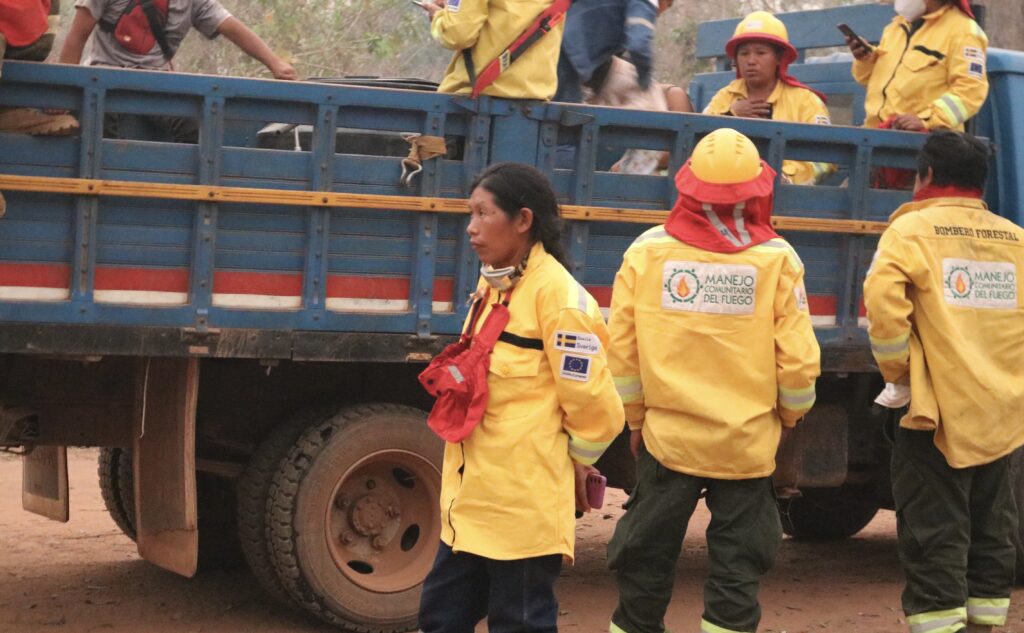
Amid the disaster, the communities showed what determination truly looks like. Volunteer fire brigades mobilised, neighbours cared for those who had been displaced, and forest monitors reported on the fires’ progression long before the authorities were able to reach them.
It was for this reason that the workshop opened with participants sharing their own experiences of the fires.
The forest’s enemies
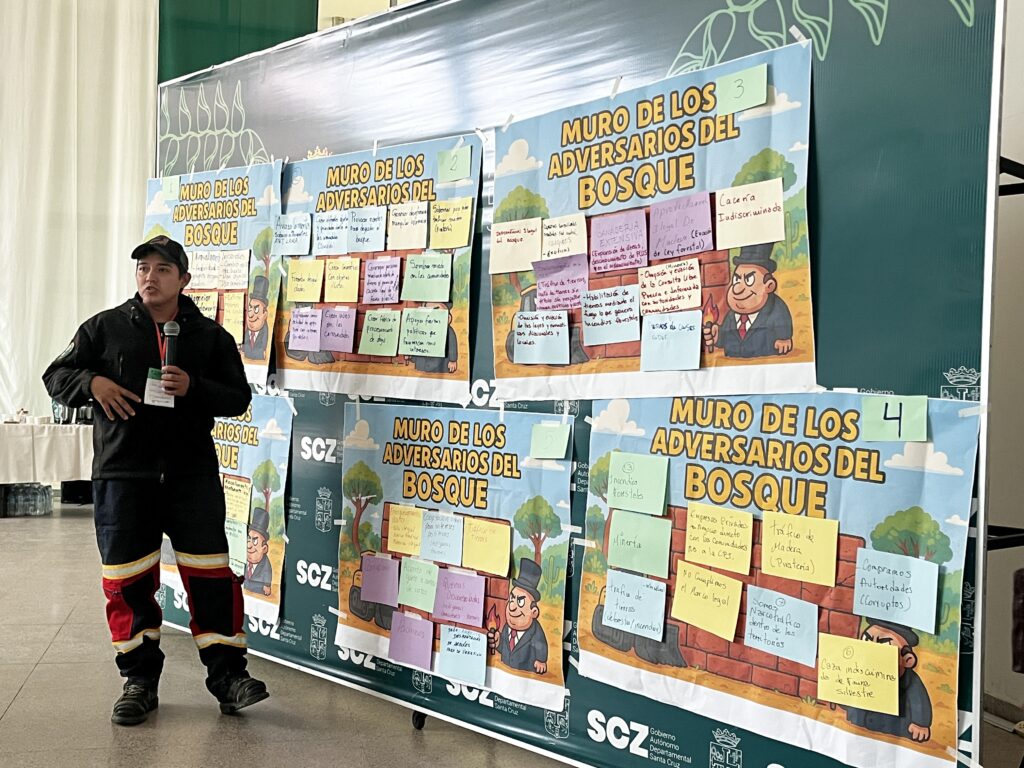
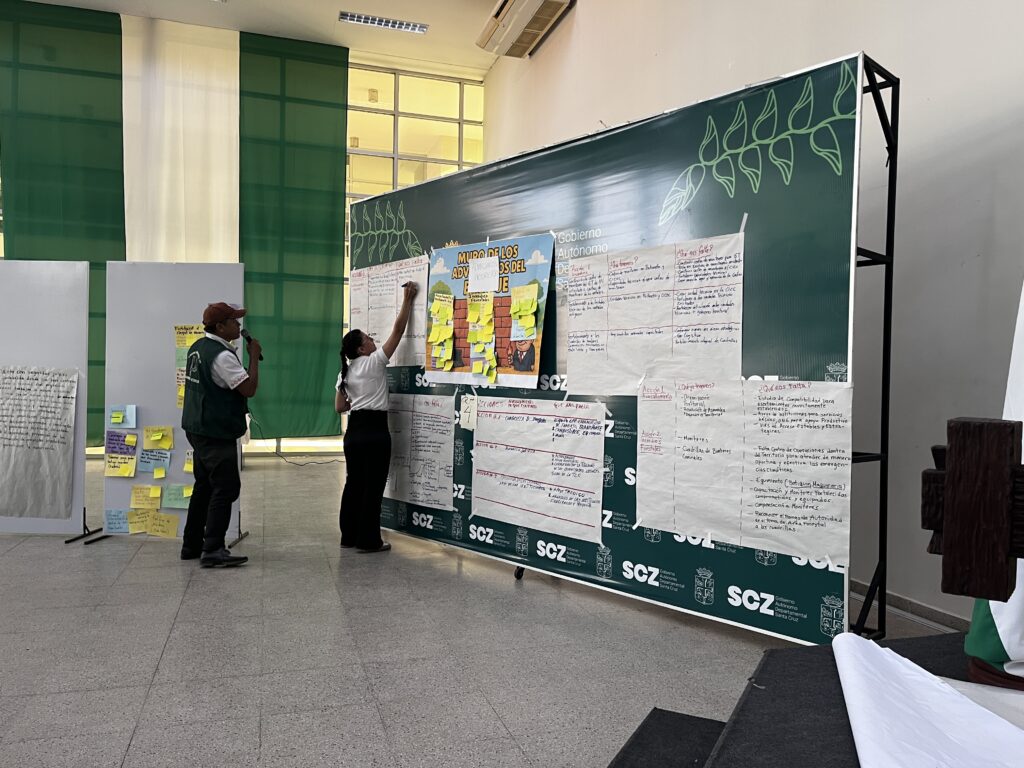
Participants were asked to step into the role of “the forest’s enemies” and write down how Monte Verde could be harmed most effectively.
Soon, the walls were covered in Post-it notes bearing words that everyone in the territory knows all too well:
- “Avasallamientos”; unlawful land invasions in which groups clear forest to seize territory.
- Fires; both deliberately set and accidental, fuelled by drought and extreme temperatures.
- Illegal deforestation and logging.
- Mining; contaminating rivers and pushing communities from their homes.
- Weak law enforcement; rules that exist on paper but rarely in practice.
And this was precisely why they had gathered: to move from recognising the threats to taking collective action.
A vision takes shape
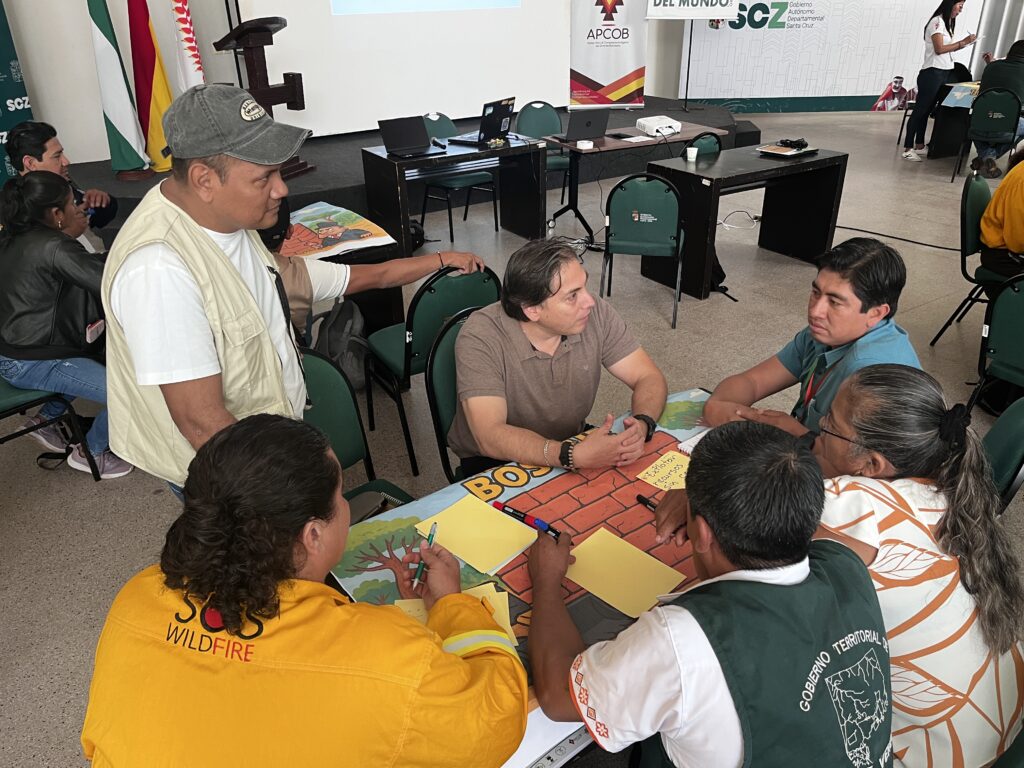
After identifying the threats, the workshop turned its attention to the future. In groups, participants outlined what they want Monte Verde to look like five years from now — not in far-fetched dreams, but in realistic and tangible future scenarios.
Across the visions, a common picture began to emerge:
- Monte Verde wants its volunteer fire brigades to be equipped for the realities they face: recognised as an integral part of the emergency response system, and provided with the gear, training and logistical support that the situation demands.
- Monte Verde wants a unified emergency operations centre: a place where decisions are made and responses coordinated when it truly matters. Action should come from one coordinated hub, not from scattered efforts.
- Monte Verde wants stronger governance: clear legal security for the territory, robust decision-making structures, and improved coordination with the state.
- Monte Verde wants an integrated monitoring system: not just drones and apps, but a coherent setup in which local forest monitors and fire brigades work from the same information.
From vision to action
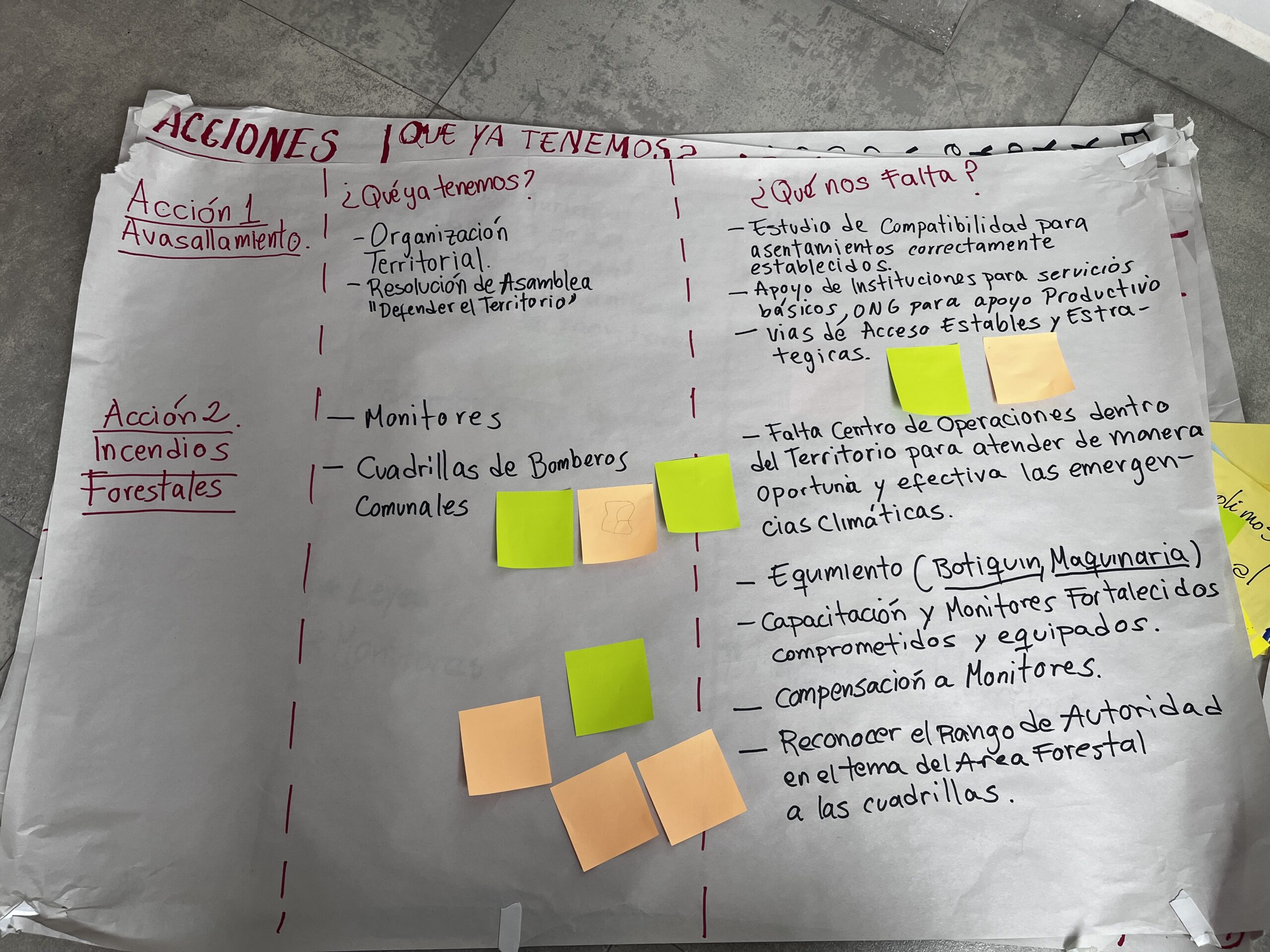
The workshop concluded with participants identifying three key areas for action:
1. A strengthened monitoring system as the heart of forest protection.
Monte Verde already has a network of local forest monitors, but they lack:
- drones, GPS units and improved software
- stronger internet and data infrastructure
- capacity building and training
- coordination between local and territorial monitoring centres
It may sound technical, but the essence is simple: if you don’t know where a fire starts or how it spreads, you cannot stop it.
more4nature contributes by developing methods and tools that make locally collected data usable within a shared monitoring system.
2. A robust fire response system. Because people save people
Monte Verde’s volunteer firefighters saved lives in 2024. Without them, the tragedy could have been far worse.
The volunteers explained that they are ready to do even more, but often lack the most basic equipment needed to act quickly and safely. This includes protective gear, transport, radio communication and first-aid supplies.
For this reason, strengthening the fire response system was voted one of the most essential priorities.
This effort closely aligns with more4nature’s work on reinforcing local emergency structures.
3. A unified system for decision-making
Most territorial conflicts in the area stem not from a lack of rules, but from a lack of cooperation. That is why the third key priority was:
- shared decision-making processes
- data sharing
- common protocols for fire prevention
- and genuine consultation before access to land is granted
This reflects a core more4nature principle: creating stronger governance through shared procedures, open data and coordination among all actors.
When resilience is built by people
The workshop in Santa Cruz was not just a planning exercise. It marked the beginning of a new chapter for Monte Verde. The experiences shared and the decisions made are part of a broader effort to strengthen community-based monitoring, improve collaboration with public authorities, and ensure that local actors can respond swiftly and effectively when crises arise.
These are precisely the kinds of processes supported and strengthened through initiatives like more4nature, but the local effort is always at the heart of the solution.
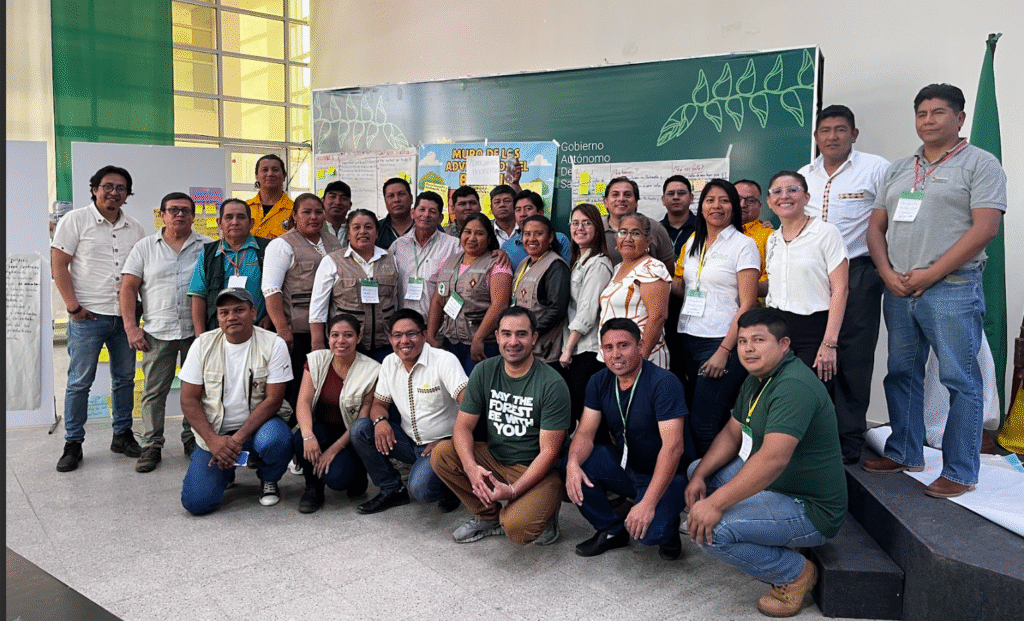
The workshop also showed that Monte Verde is not only a place struck by disaster. It is a place that rises, reorganises, and builds new structures. Not from behind a desk, but from the lived experience of those who are in the forest every day.
These are the people who rise early to patrol the land.
The young volunteers learning to fly drones.
The monitors who record every unusual column of smoke.
When people protect the forest, they strengthen its resilience.
more4nature
more4nature is a project funded by the EU’s Horizon Europe programme. It works to strengthen the role of local communities in environmental protection by combining:
- data collected by citizens
- shared monitoring tools
- stronger cooperation between communities and authorities
- improved enforcement of environmental legislation
The aim is to ensure that citizen-generated data and local perspectives are actively used in environmental monitoring, fire prevention, and territorial governance.
Verdens Skove is a partner in the project and works with the Chiquitano people of Monte Verde on one of the project’s case studies.
Read our articles
Press Freedom Lives On. Just Not in Nicaragua
Record-Breaking Forest Fires Ravaged Bolivia in 2024
What Happens to Wildlife When Fire Reaches the Rainforest?

The Baru Nut Gets the Green Light