
More than four million hectares of nature went up in flames in Bolivia in 2024. Behind these staggering figures lie human struggles. That is why your support during the wildfire months is crucial. While scientists measure forest loss in hectares, women like Ignacia, Maria, and Nancy measure the consequences in lost homes, children sickened by smoke, and nights spent fighting flames with little more than water, basic equipment, and sheer determination.
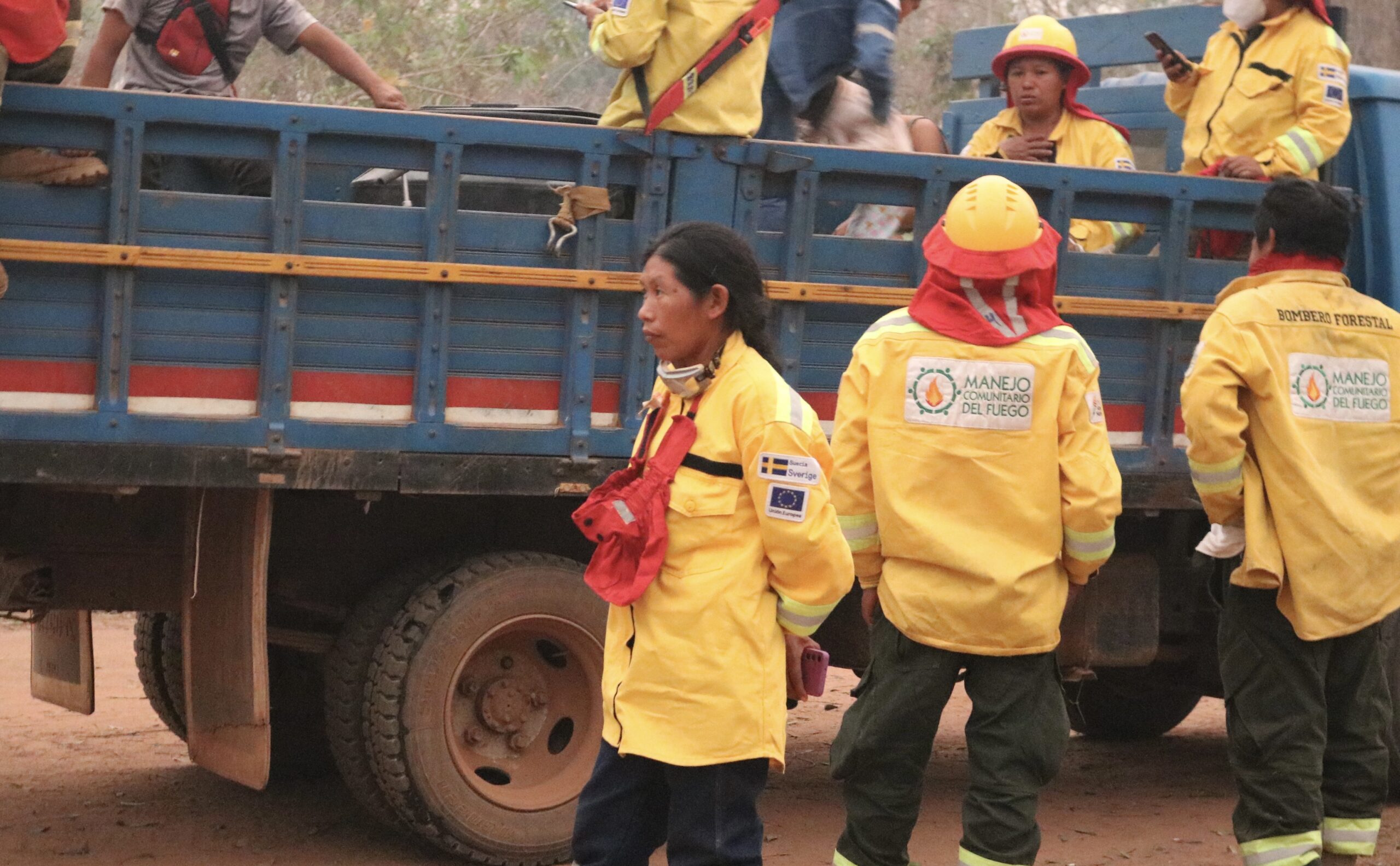
It is late, and the heat still lingers in the air as Ignacia Supepí laces up her boots and disappears into the forest. She is the leader of her community and a volunteer firefighter with the Río Blanco fire brigade. For twelve nights, she and the rest of the local emergency team have battled flames slowly advancing into their territory. They fight the fires at night, when the wind calms and the temperature drops slightly. Equipment is scarce, water is almost gone, but they keep going—for the village and for the trees.
Medicinal copaiba trees, valuable cusipalm trees, and young almond trees that were flowering for the very first time are all at risk. Years of restoration work can be lost in just seconds. In Río Blanco, Bolivia, help is scarce. This is what Ignacia Supepí told us before once again heading back into the smoke-filled forest.
“We have been fighting for days without water, without food, without help. And when we asked the authorities for support, they told us there was no fire because the satellite didn’t show it. But we are standing right in the middle of the flames.”
Volunteer fire brigades like the one Ignacia is part of are fighting on the front lines. But what they face goes far beyond their own villages and forest areas. In 2024, fires set grim new records. In Bolivia and Brazil, more wildfires were recorded than in any other year in the past two decades. More than four million hectares of nature burned—an area the size of Denmark.
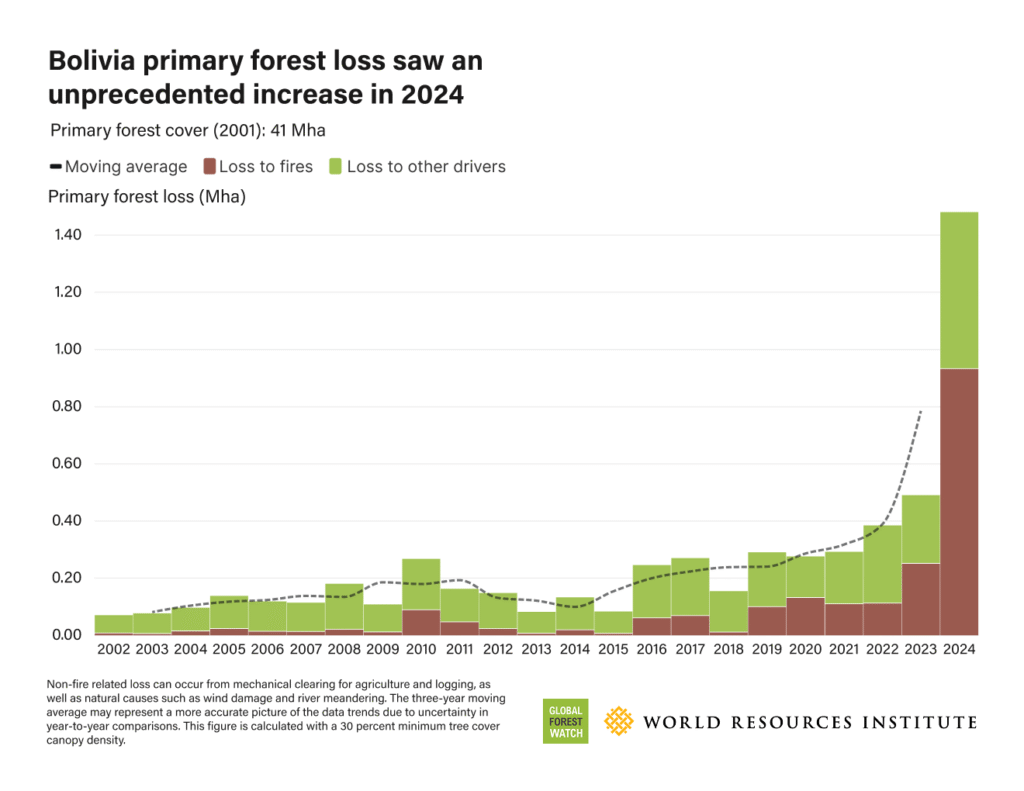
The figures come from Global Forest Watch, a collaboration between researchers at the University of Maryland and the World Resources Institute (WRI). They point to an extremely alarming development, explains Jakob Kronik, Co-Secretary General and Global Director at Forests of the World:
“When so much forest is lost in a single year, the consequences go far beyond immediate damage to nature. It affects entire ecosystems and the people who live in and depend on the forest far into the future.”
Maria Woke Up to Fire at Her Doorstep
Drought and climate change are not the only forces driving the flames. The scale of the fires is also closely linked to political decisions and pressure from industrial agriculture. For environmental defender Maria Motoré, the forest fires of 2024 arrived with an intensity she had never experienced before.
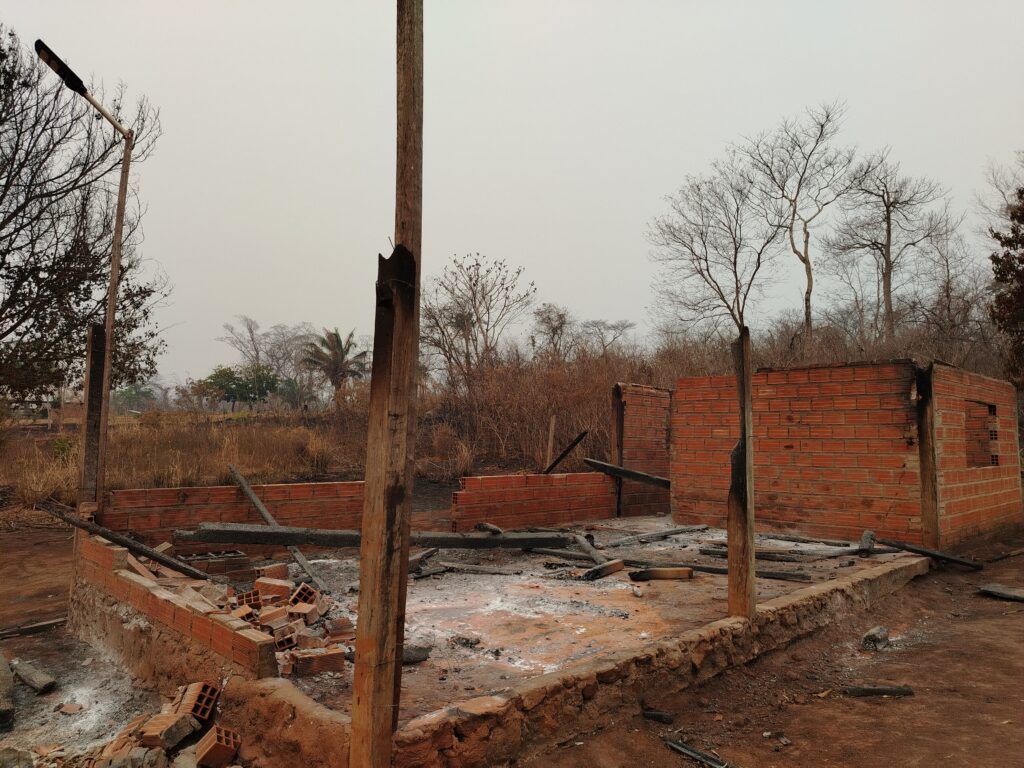
In their small home deep in the forest in the Monte Verde territory of Bolivia, Maria and her four children had gone to sleep while her husband stayed awake, watching the darkness outside. They knew that forest was being burned nearby to clear land for agriculture. After hours of vigilance, he too fell asleep. Just a few hours later, at 2:30 a.m., the family was jolted awake by an explosion. When they ran outside, it was already too late. The outbuildings were in flames.
Maria and her husband immediately grabbed water containers to fight the fire—but the tank was empty. After a long drought, their reservoir had dried up, and the last remaining water had been given to their animals to keep them alive.
”We have lived here for eight years. We built everything from scratch. Now my home has burned down, and we have lost everything,” Maria Motoré told us. When neighbours arrived to help, the house was already engulfed in flames. Everything they owned was lost.
Global demand for meat and animal feed gives the agricultural industry strong incentives to clear and burn ever larger areas of tropical forest. According to Global Forest Watch, cattle ranching is the single largest driver of deforestation, while agriculture overall is the biggest industry behind forest destruction.
Forests are typically cleared by felling trees, leaving them to dry during the dry season, and then setting them on fire. Controlled burning was once part of traditional land management, but today many fires spiral out of control. Climate change has made forests drier and far more flammable, often turning planned burns into violent wildfires that spread uncontrollably into otherwise intact forest areas.
The result is longer, more destructive, and far more dangerous fire seasons—with severe consequences for nature and for the people who live in and depend on it.
Nancy Paime is vice-chair of the community-run local association (OTB) and of the women’s business organisation Mujeres Emprendedoras de Santa Mónica. Like Ignacia and Maria, she is deeply affected when the forest burns. For them, the wildfires sweeping across large parts of Bolivia are not statistics—they are their lives.
“All volunteers fight the flames with the most basic tools they have, and sometimes they have nothing at all to fight with,“ Nancy Paime said in 2024..
“Essential supplies have to be carried through burning areas in backpacks, and firefighters sleep only a few hours at a time before returning to battle fires that move closer each day.”
Your Support During the Fire Months Makes a Difference
In Bolivia, another wildfire season is approaching. From July to September, temperatures rise and the land dries out—the months when the risk of fires is highest. This means that women like Ignacia, Maria, and Nancy must once again remain on alert.
That is why Forests of the World supports the Movima people and their fire brigades with training and equipment, giving them a better chance to prevent and combat the increasingly frequent fires. We provide training not only in firefighting, but also in prevention. For example, they are trained to operate drones equipped with thermal cameras that can detect forest fires—even at night. They receive satellite data to better identify high-risk areas, as well as equipment that allows them to move more effectively and extinguish fires.
When the flames raged in 2024, all three women spoke of the lack of basic necessities: water to fight fires, masks to protect against smoke, and medicine for children and elderly people suffering from coughing, fever, and breathing difficulties. They also lacked fire extinguishers, hoses, and protective gear—essential items if volunteers are to stand a chance when entering burning areas.
These are the things we help provide—but Forests of the World depends on support to deliver as much assistance as possible.
“When you support efforts during the wildfire months, you help ensure that aid reaches the very areas where there would otherwise be no one to respond,” says Jakob Kronik.
“That support makes sure local communities are not left alone when the fire comes close.”
Beyond emergency response, support is also needed for food and basic supplies for families who have been forced to flee their homes. This work is organised in close cooperation with local partners and communities. Because the fight against wildfires is about both nature and the people who protect it.
Read our articles
Vote for Biodiversity Law Denmark
Press Freedom Lives On. Just Not in Nicaragua
What Happens to Wildlife When Fire Reaches the Rainforest?

The Baru Nut Gets the Green Light