
The national and global biodiversity crisis must be addressed with an ambitious and binding framework law that ensures compliance with international commitments.
The world – and Denmark – is in the midst of a biodiversity crisis. Natural areas are shrinking and becoming fragmented, their natural processes are disrupted or cease altogether, and their species disappear one by one. At the same time, ecosystems are losing their ability to stabilize the climate, prevent flooding and landslides, supply clean water in reliable quantities, support fishing and hunting, serve as sources of medical and industrial innovation, or simply exist for the enjoyment of nature itself. The time has come for an effective and binding biodiversity law that matches the seriousness of the challenge.
Denmark lacks a comprehensive legal framework
According to the Biodiversity Council, the situation is clear: Denmark lacks a coherent and goal-setting legal framework for biodiversity. Today, nature protection is spread across many laws, which are often outdated, while other laws frequently take precedence over nature and the species we share the planet with. The result is insufficient protection, a lack of legal and geographic coherence, and no clear political obligation to act when targets are not met. Biodiversity deserves a law that matches the Climate Act in strength and structure.
Denmark possesses the knowledge, the economic capacity, and the responsibility to act. What is lacking is political will. With the upcoming parliamentary election, we now have a concrete opportunity to change this. Vote for a party that has committed to an ambitious biodiversity law.
What a biodiversity law should look like
At Forests of the World, we propose a biodiversity law structured as a framework law with clear, quantifiable, and time-bound targets. The law should establish that Denmark must, by 2030, have a plan to ensure that by 2045 at least 30 percent of land is protected nature—of which at least 10 percent is strictly protected, and by 2035 set equivalent targets for marine areas. At the same time, ecosystem restoration must take place systematically and at large scale, so that up to 90–100 percent of potential natural areas are restored by 2050. This is ambitious, but also necessary, and is in fact still slightly below our international commitments.
A key element of a biodiversity law should be five-year interim targets and an annual assessment of whether Denmark is on the right track. A strengthened Biodiversity Council is crucial for setting these interim targets, advising on how they can be achieved, and monitoring progress. If it cannot be demonstrated that the targets will be met, there must be a clear legal obligation to act, similar to that in the Climate Act. Biodiversity cannot wait for another election cycle.
International standards and stronger protection
Protection must be based on international standards. Today, many Danish natural areas are labeled “protected” without truly being so. Forest of the World therefore proposes that Denmark consistently apply the International Union for Conservation of Nature (IUCN) categories for protected areas. This would ensure transparency, quality, and international comparability. Through the so-called “Step Model,” new areas could gradually be elevated to higher levels of protection through ecological restoration and improved management.
An effective biodiversity law must also take precedence over outdated or conflicting legislation. This would make it possible to reform rules, subsidies, and schemes that currently harm biodiversity unintentionally. At the same time, a nature zone should be introduced in spatial planning legislation where biodiversity is the primary priority, along with a land reform that makes it easier to remove contiguous areas from intensive production in exchange for fair compensation.
Private landowners play a crucial role. Therefore, we propose legislation on Biodiversity Stewardship, allowing private landowners to enter into long-term agreements to support biodiversity in return for fair financial compensation, tax incentives, and professional support..
Denmark also bears a global responsibility
Finally, Denmark has a global responsibility. Due to our consumption and imports, half of the biodiversity loss caused by Danish consumption occurs outside Denmark, often in regions with particularly high or fragile biodiversity. A biodiversity law should therefore also commit Denmark to reducing its global biodiversity footprint, supporting global biodiversity protection, and fulfilling international agreements, including the UN’s Kunming–Montreal Global Biodiversity Framework.
A strong biodiversity law is necessary to safeguard the diversity of species and nature, maintain intact ecosystem services, and protect the quality of life of future generations. Six Danish political parties (LA, SF, RV, K, Å, and Ø) have expressed support for a biodiversity law with at least 10% strictly protected nature. Four of them (SF, RV, Å, and Ø) also support the 30% target. Find out what your party intends to do and vote accordingly. We know what is at stake. The question is whether we will act while we still have the chance.
Read Our Articles
Press Freedom Lives On. Just Not in Nicaragua
Record-Breaking Forest Fires Ravaged Bolivia in 2024
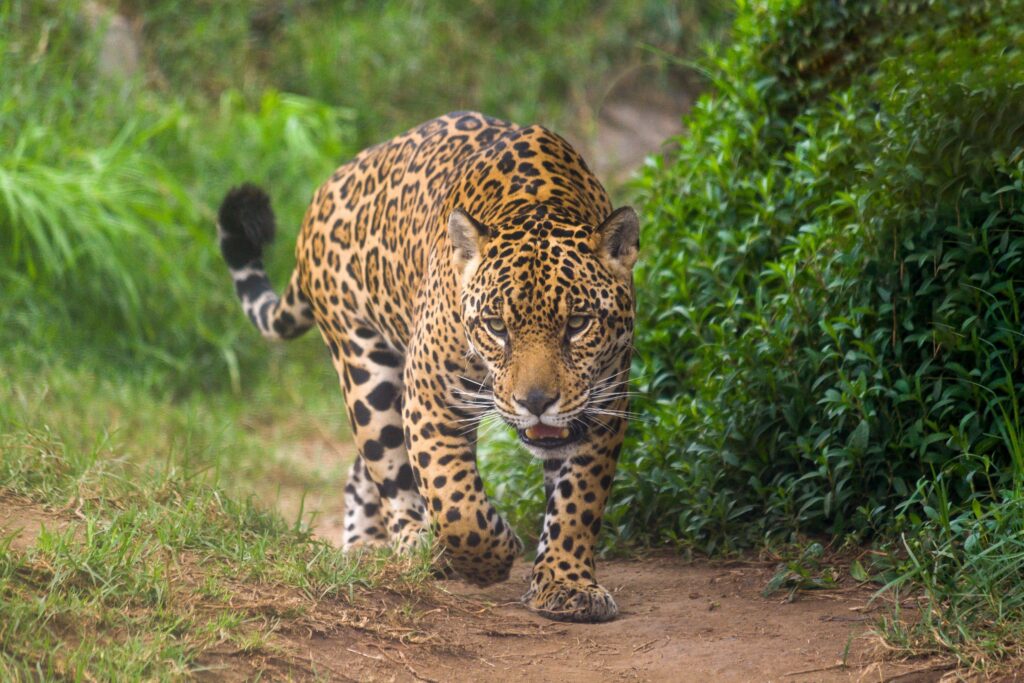
What Happens to Wildlife When Fire Reaches the Rainforest?

The Baru Nut Gets the Green Light
WILD NATURE
Wild Nature – the forgotten solution to the climate crisis
When we talk about the climate crisis, it can easily feel distant and technical. Here, we have gathered knowledge and stories about wild nature and climate in one place. The starting point is the book Wild Nature – the forgotten solution to the climate crisis, but it doesn’t stop there.