What Happens to Wildlife When Fire Reaches the Rainforest?
From the jaguar on the forest floor to the frog by the waterhole. Wildfires affect species differently depending on their size, lifestyle, and position in the forest. And for those that survive the flames, a new struggle begins in a landscape that no longer resembles the one they knew.

As deforestation and climate change increase the frequency and intensity of wildfires, the consequences for wildlife are severe. Different species are affected in different ways. While the jaguar can flee, other animals are forced to burrow underground or climb higher into the trees. And those that survive must attempt to adapt to a damaged and transformed ecosystem.
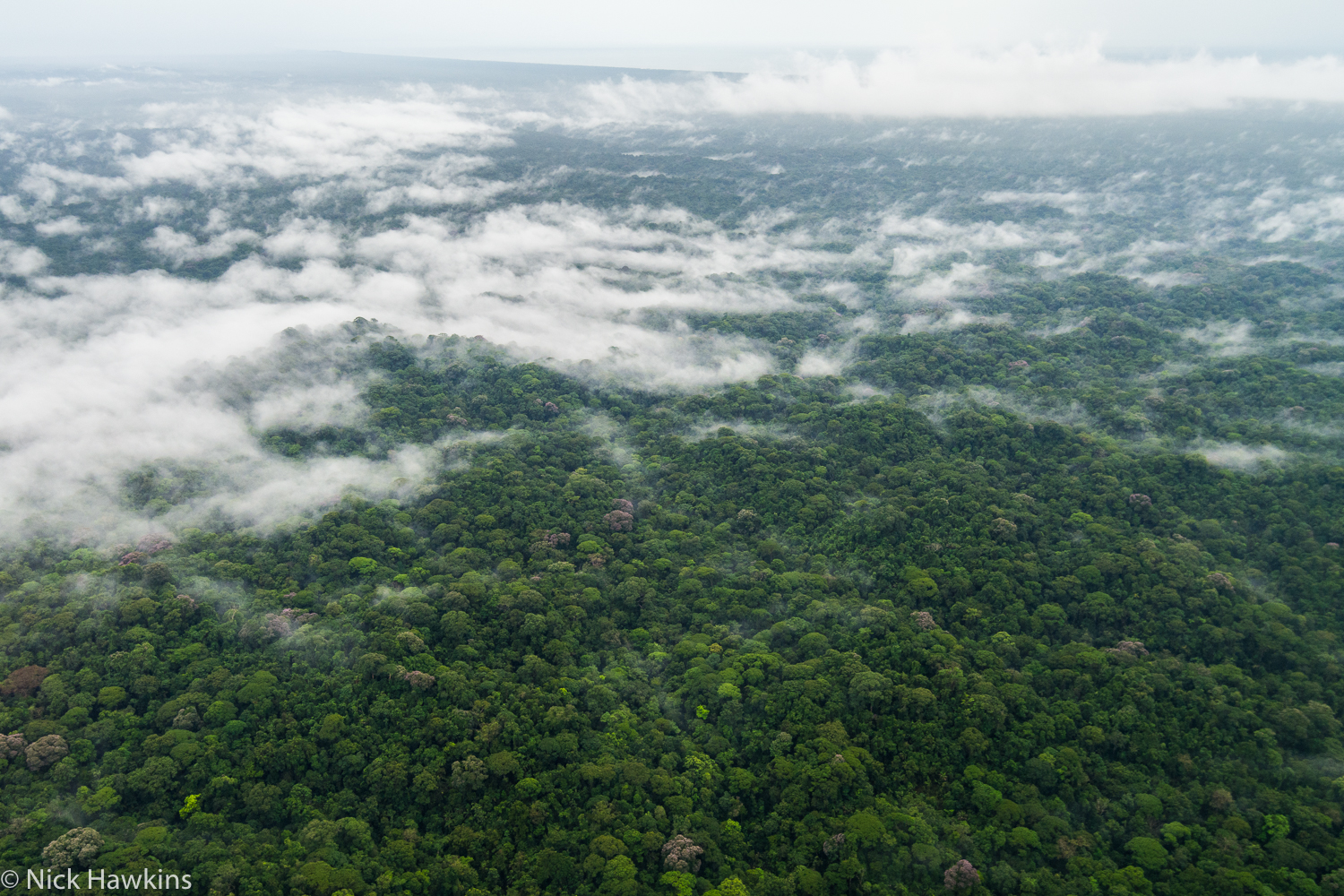
The wildfires raging in countries such as Bolivia and Brazil – where Forests of the World works – leave behind more than scorched trees and blackened soil. The fires have serious consequences for the people who live in and depend on the forest, but also for wildlife. From large predators to small amphibians, from the forest canopy to the waterhole—no one is spared. Even the most adaptable animals are affected when their homes turn to ash and food disappears.
During the three months when wildfire season is at its peak, you can support Forests of the World’s work and help protect animals, people, and forests. Your support goes to local fire brigades, providing access to equipment such as fire extinguishers, radios, and protective gear, as well as to preventive measures such as firebreaks and collaboration with Indigenous Peoples.
The support ends automatically after three months, as the summer months are the high season for wildfires – when help makes the greatest difference.

Whether an animal survives a wildfire does not depend solely on the strength of the flames. It also depends on the animal’s size, speed, and where it lives in the forest. Some animals have an advantage in their mobility, such as jaguars that can run or swim away, or birds that can fly. Others, like spider monkeys, climb higher into the canopy to seek refuge. And for some—such as frogs and small amphibians—survival means burrowing into the ground, finding cavities in the soil, or hoping that water will offer protection. But even then, survival is far from guaranteed.
Jaguar Territories in Flames
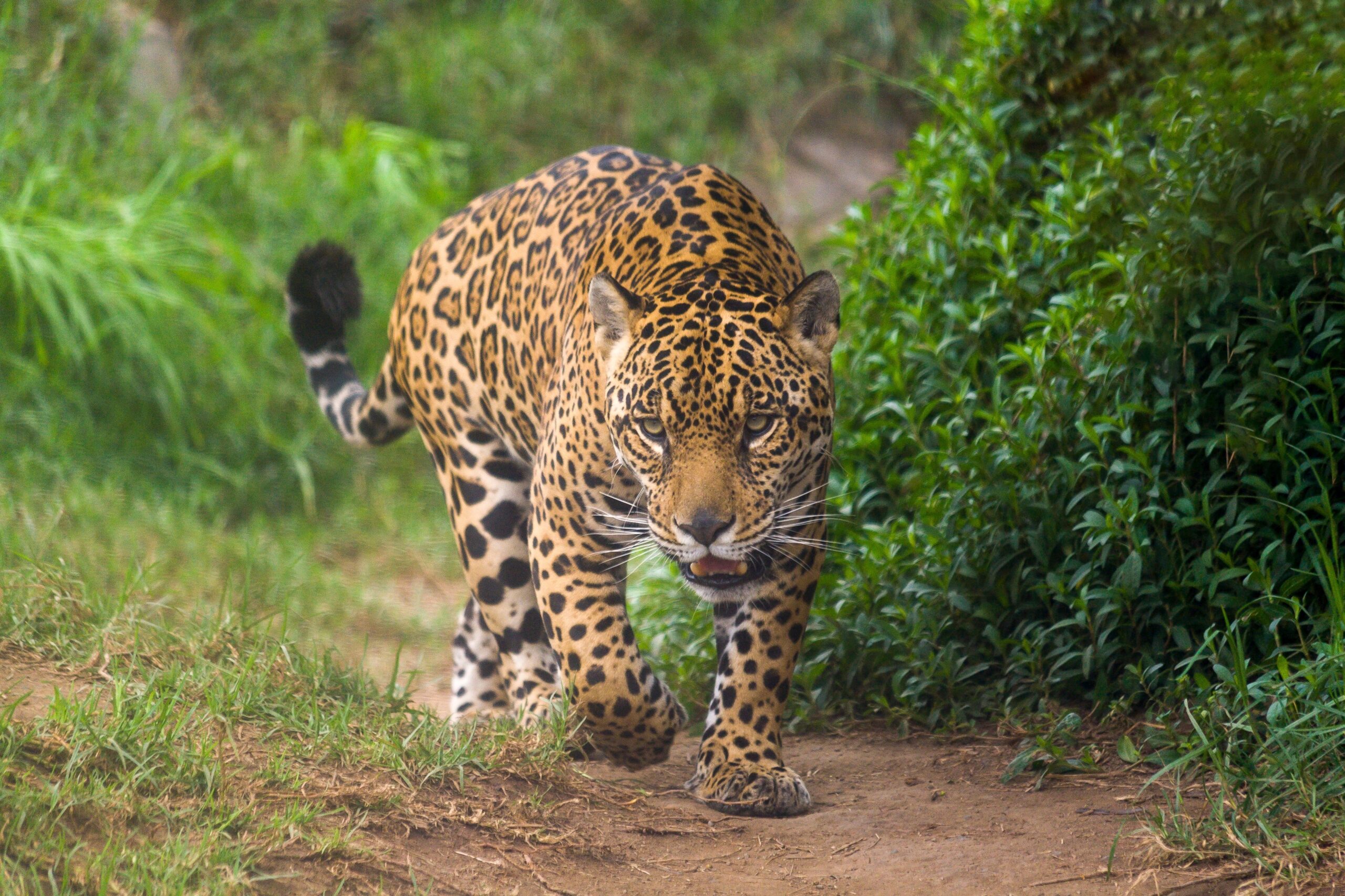
When wildfires break out in the Amazon, large mammals such as tapirs, deer, and jaguars have only one option if they are to survive: they must flee. Many large mammals move toward rivers and wetlands as smoke spreads. The jaguar, the rainforest’s apex predator, is agile and an excellent swimmer. But even if it escapes the flames, it rarely escapes the consequences.
These impacts were evident in Brazil’s Pantanal in 2020, where 78% of known jaguar territories burned. This led to fewer cubs, increased conflict between jaguars, and higher mortality.

Jaguars are solitary animals that usually keep their distance from others of their kind and require vast territories. When fire forces them out of their home ranges, the risk of conflict increases—both with other jaguars and with humans. When jaguars lose their habitat and prey, they sometimes turn to livestock in the areas they move into, or to cattle now grazing where rainforest once stood.
Cattle Production Drives Deforestation
Behind many of the devastating wildfires lies global demand for meat and animal feed. To make room for cattle ranching and soy production, vast areas of tropical forest are cleared. According to Global Forest Watch, cattle ranching is the single largest driver of deforestation.
The method is often the same: trees are felled, left to dry in the sun, and then set on fire. Climate change acts as an accelerating factor, and many fires quickly develop into uncontrollable wildfires that turn planned clearing into destructive fire disasters.
Fleeing the flames triggers new problems—both for the animals themselves and for the ecosystems they are part of. If wildfires are not contained and their underlying causes addressed, both species and ecosystems risk being lost. Large mammals and big cats like the jaguar may have the strength and mobility to flee—but not necessarily the ability to survive what comes after.
Escape into the Canopy
Not all animals have the ability to move far away from the flames. In the rainforest canopy, other species attempt to survive in very different ways. Smaller animals such as spider monkeys, rather than fleeing across the ground, move upwards.
As fires spread through the Amazon, spider monkeys choose a different strategy from many ground-dwelling animals. They climb higher and higher into the treetops, hoping the flames will not reach them. But this is a risky tactic—especially as wildfires grow more intense. Even if they are not burned, they may still suffer from the heat and smoke rising through the canopy.
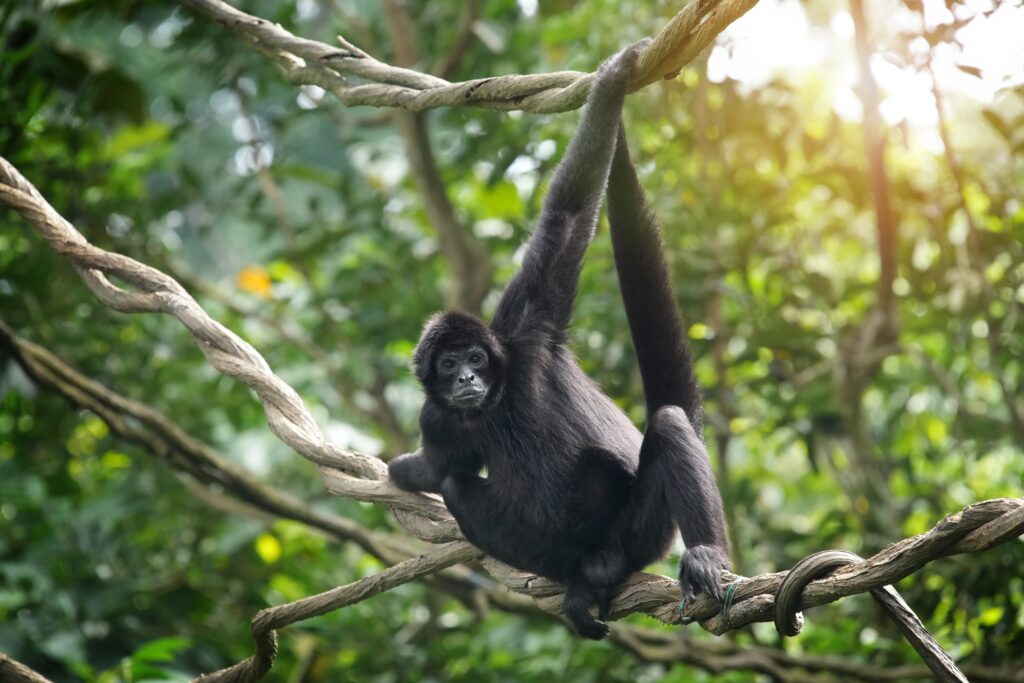
When the fires subside, the monkeys that survive return to their territories. Trees are scorched or fallen. Fruits, leaves, and insects that once formed part of their diet are gone. Many animals do not die in the flames themselves, but in the aftermath—due to starvation or illness caused by smoke exposure.
Spider monkeys may, in some cases, adapt by changing behaviour and diet. But when the rainforest becomes fragmented, new problems arise: increased competition, reduced access to food, limited ability to move to new areas when one burns, and closer contact—and conflict—between wildlife, livestock, and humans.
Several studies have shown that animal movements following fires can increase the risk of disease spread. As wild animals move closer to human settlements in search of food, the risk of transmission of viruses and parasites such as dengue, Zika, and yellow fever rises. The problems do not end when the flames die out. For some species, they are only just beginning.
Underground, Underwater, But Still at Risk
The rainforest’s smallest inhabitants have far fewer options when fire approaches. Small animals such as frogs, salamanders, and rodents cannot flee far and instead must escape downward—to burrows, beneath leaf litter, or into wetlands.
For many amphibians, this is their only chance. They have thin skin that dries out easily and through which they also breathe, making drops in humidity life-threatening. Some amphibians attempt to seek refuge in water to survive the fire. But even lakes and waterholes are not necessarily safe. Fire raises water temperatures, while ash and soot make the water murky and toxic. Frog eggs can be smothered by sediment, and small fish and amphibians can die from oxygen depletion or heat shock..
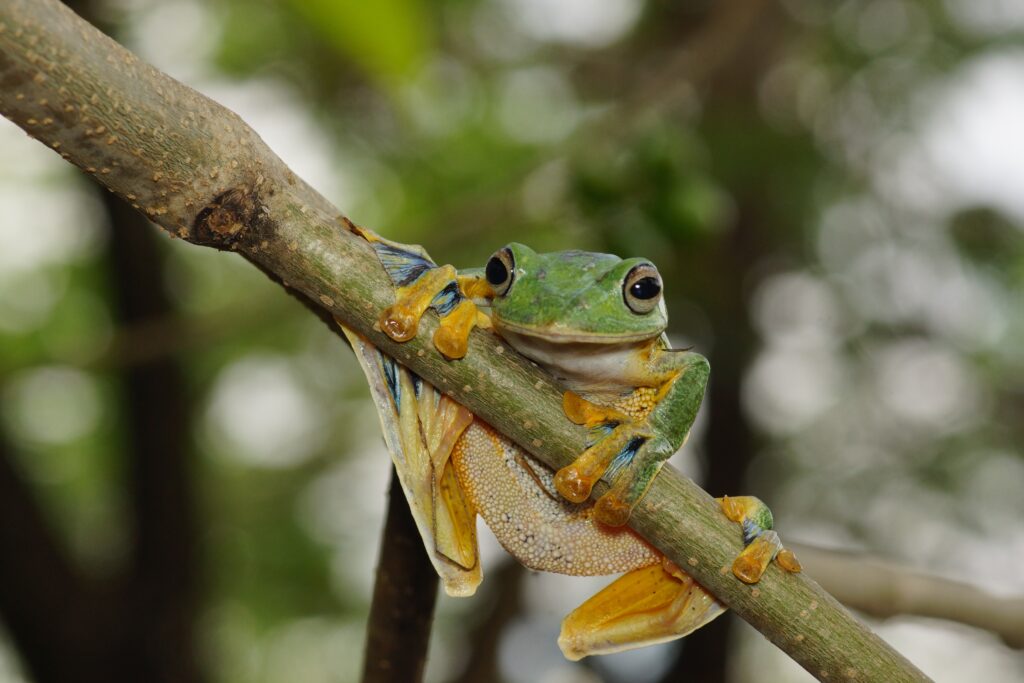
While some species may return and even thrive in waterways enriched with new nutrients, many smaller animals are lost—not only during the fires themselves, but also in the weeks and months that follow, as the landscape changes and moisture disappears. After the flames retreat, the remaining landscape is often entirely different: dry, open, and lacking the moist refuges these animals depend on.
Wildfires do not stop on their own, and their consequences affect entire ecosystems—from the jaguar on the forest floor to the frog by the waterhole. By supporting Forests of the World’s work during the critical wildfire season, you help protect animals, people, and forests.
Read our articles
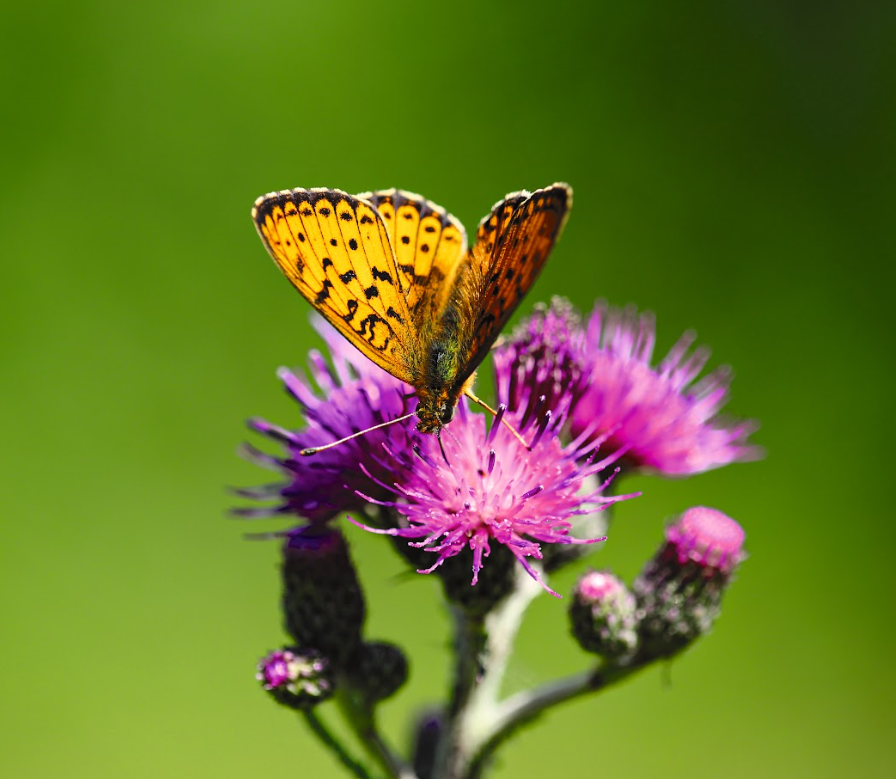
Vote for Biodiversity Law Denmark
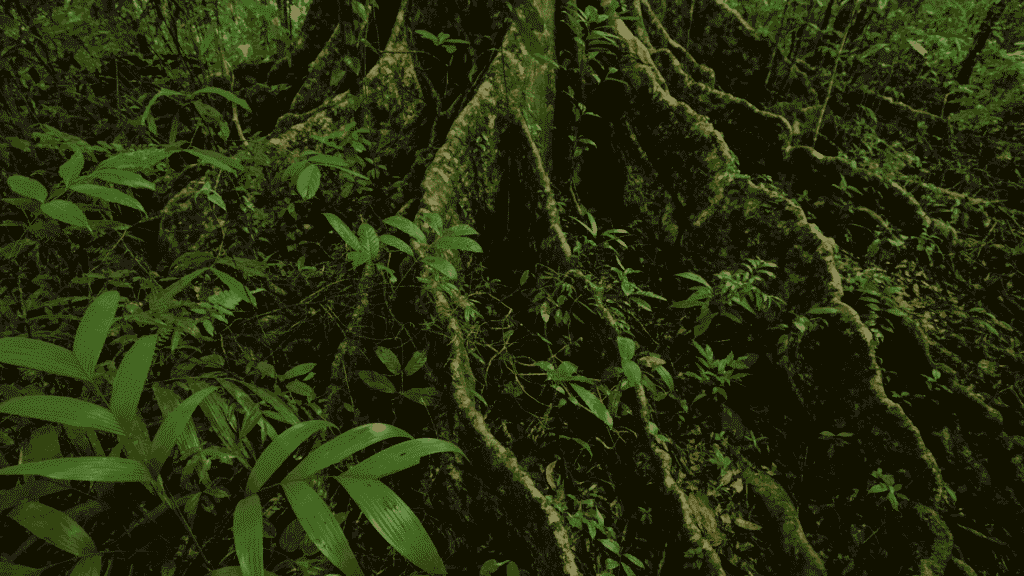
Press Freedom Lives On. Just Not in Nicaragua
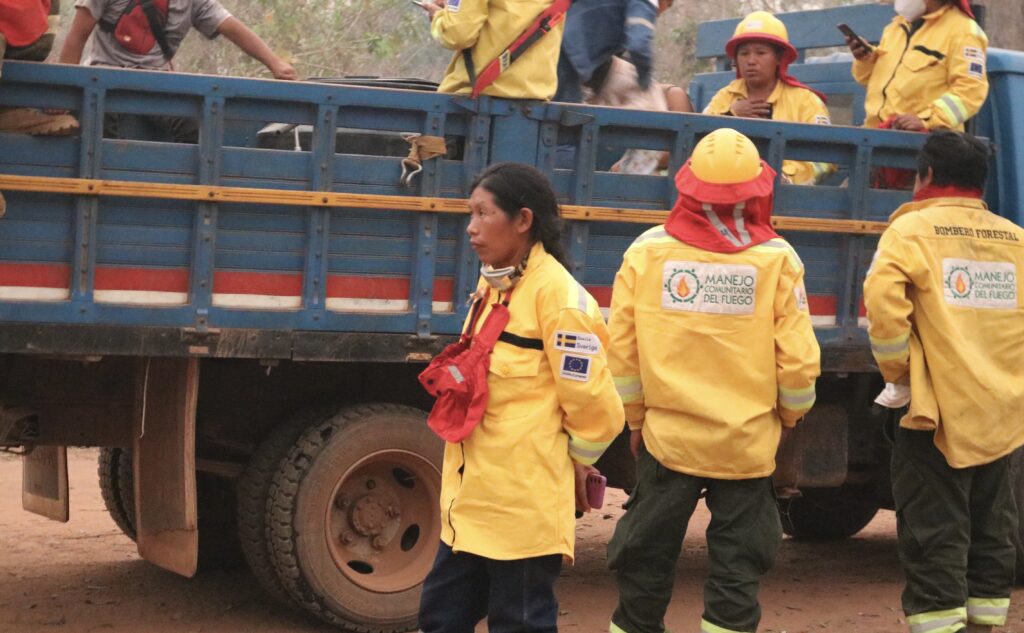
Record-Breaking Forest Fires Ravaged Bolivia in 2024
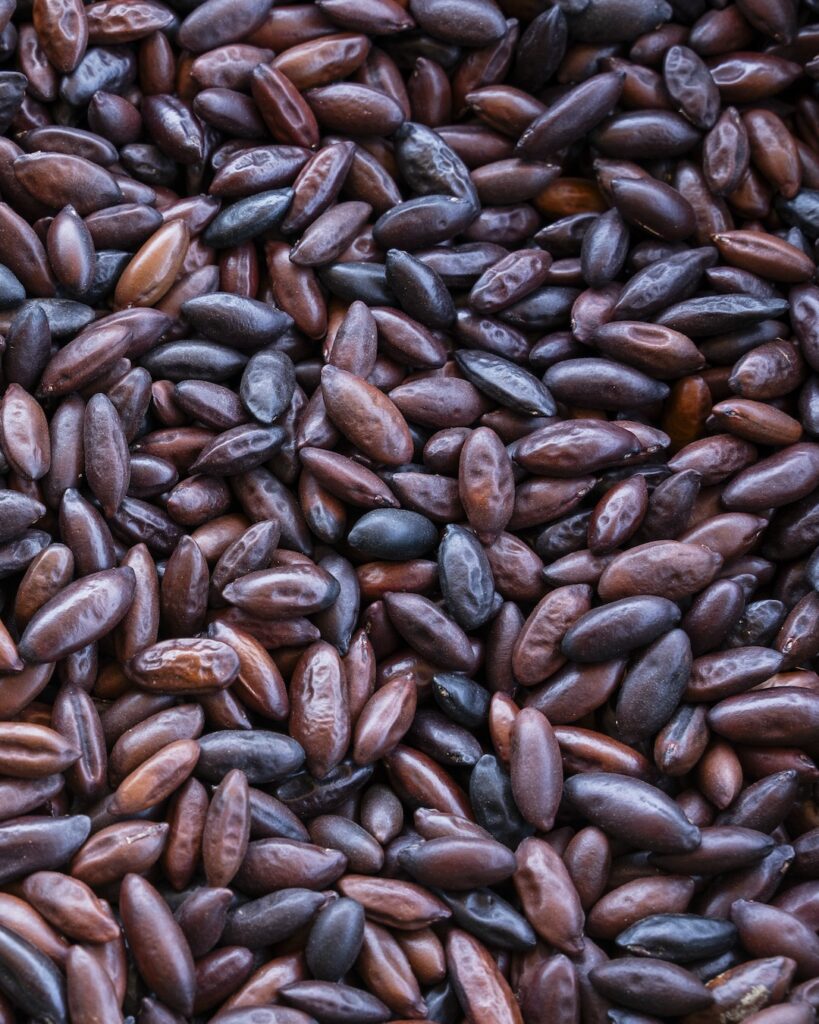
The Baru Nut Gets the Green Light