
The Sound of a Forest Under Threat
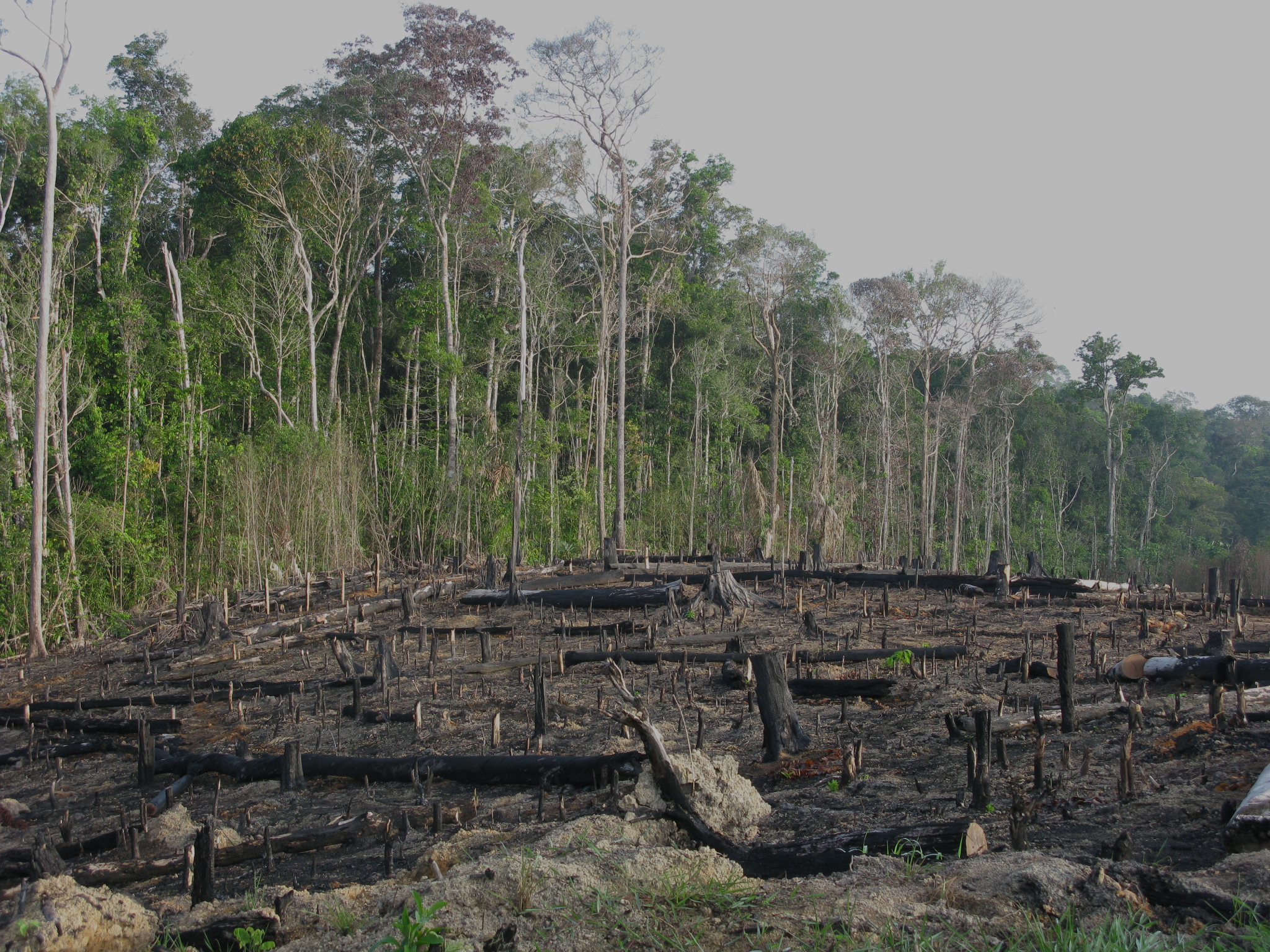
The sound of chainsaws breaks the early-morning silence long before the patrol group (CFM) from Mparo Parish reaches the forest edge. The Muhangi Forest lies within their area, and in the dim daylight, the freshly cut logs are easy to spot. They lie stacked on the ground in what is officially a protected area.
For the CFM group, the sight has become far too familiar. But every new clearing leaves clear marks—both on the forest itself and on the community’s sense of safety.
Uganda is among the countries that have lost the largest relative share of tree cover since 2000. More than 23 percent has disappeared in just two decades. The consequences are felt in Muhangi, where each new clearing pushes local communities closer to an uncertain future.
These are not isolated incidents. They are a local manifestation of a national trend that is placing immense pressure on the country’s forests.
The Forest Sustains Life
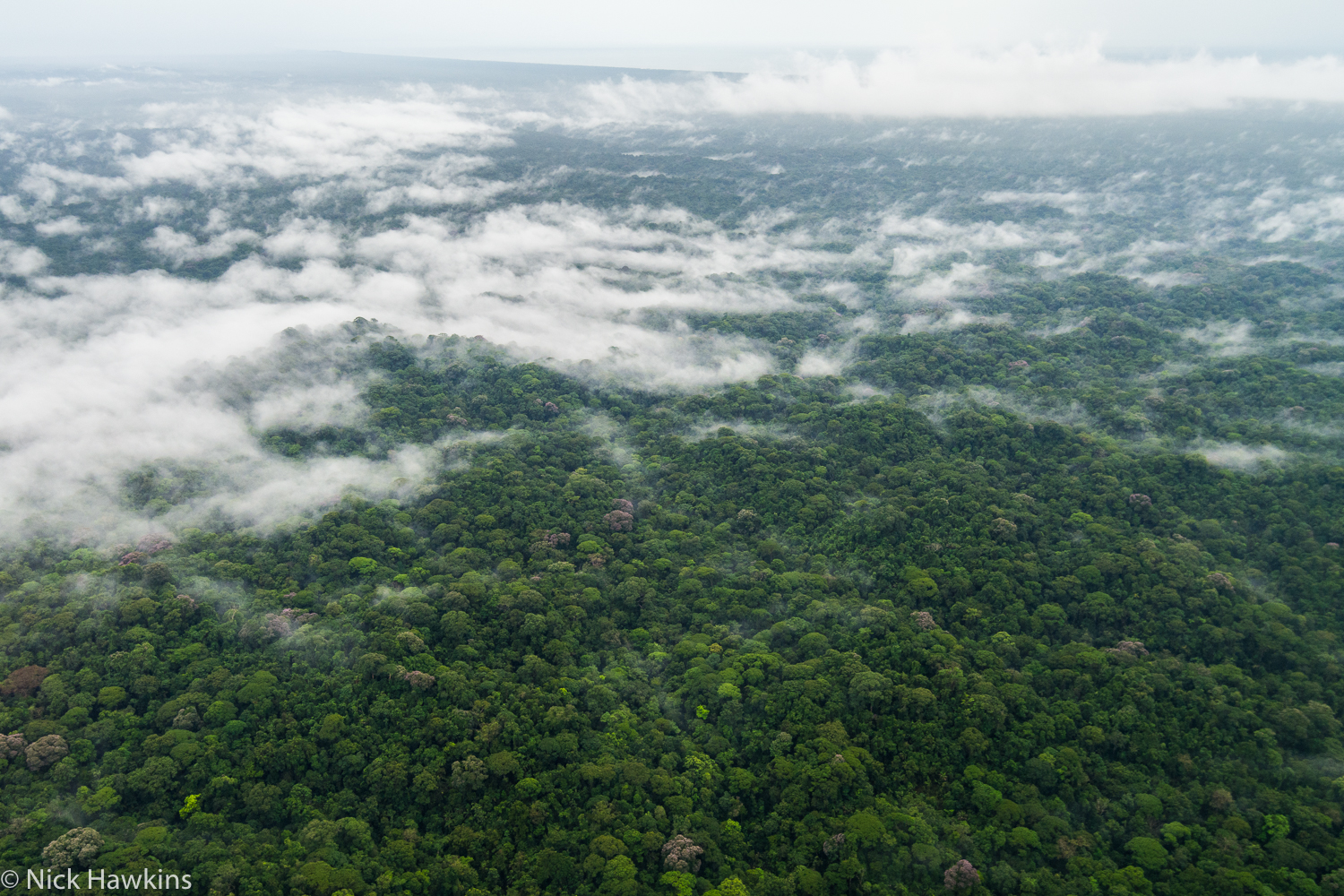
The Muhangi Forest has always been a foundation for the families living around it. It regulates the microclimate, provides water during droughts, and—through formal agreements between communities and the government—gives access to honey, firewood, medicinal plants, and materials for handicrafts.
But when the forest disappears, so do the resources everyday life depends on.
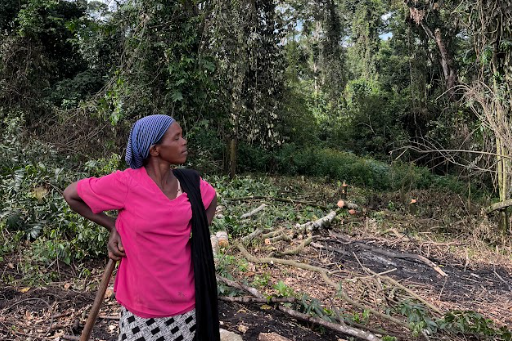
“We grew up with the cool breeze from the forest. It was green and beautiful, and you could rely on the rain. That’s no longer the case.”
~ CFM chair Tukamushaba Amos.
Global climate change is adding pressure. Temperatures rise, rainfall becomes unpredictable, and the forest’s role as a climate stabiliser becomes more important precisely as it is threatened.
The Forest Boundary Is Shifting
Although the area around Kagoora was once dense natural forest, the NFA has begun a large-scale conversion into plantation forestry, leasing land for commercial timber production.
Until recently, about one-third of the plantation area was still covered by natural forest. Today, it is difficult for communities to see where legal conversion ends and protected forest begins. Many fear that commercial interests now outweigh biodiversity, climate stability, and the local communities’ need for the forest.
A single concrete marker defines the border between the Muhangi Forest and the nearby Kagoora Plantation. In practice, it is a boundary long since crossed by chainsaws.
Managed by the National Forestry Authority (NFA), the Kagoora Plantation is being transformed into commercial plantations. Areas that once held natural forest now show clearings and rows of newly planted trees. This makes it difficult for residents and patrol groups to see where the plantation ends—and where the protected forest begins.
It is precisely in this transition zone that illegal logging thrives. As the plantation expands right up to the forest edge, there is a clear spillover effect: clearing continues into the Muhangi Forest, even though the area is officially protected.
A New Agreement – But an Uncertain Future
In March 2025, the Muhangi CFM group secured a new agreement with the NFA, granting them co-management rights over approximately 260 hectares of forest. But it is exactly in the border zone next to the plantation that much of the illegal logging takes place.
The work is demanding, and the group is often left alone to handle it.
“We have previously removed five charcoal kilns inside the forest. Illegal activities are increasing, and it is difficult to stop them,”
says General Secretary Muhera Nelson.
According to Proscovia Kemirembe, a member of the Muhangi CFM patrol, the reasons include a lack of financial support as well as practical and technical equipment:
“We don’t have enough resources. We can only reach a few places each week, and the forest is large.”
Even when they manage to identify offenders, follow-up is uncertain.
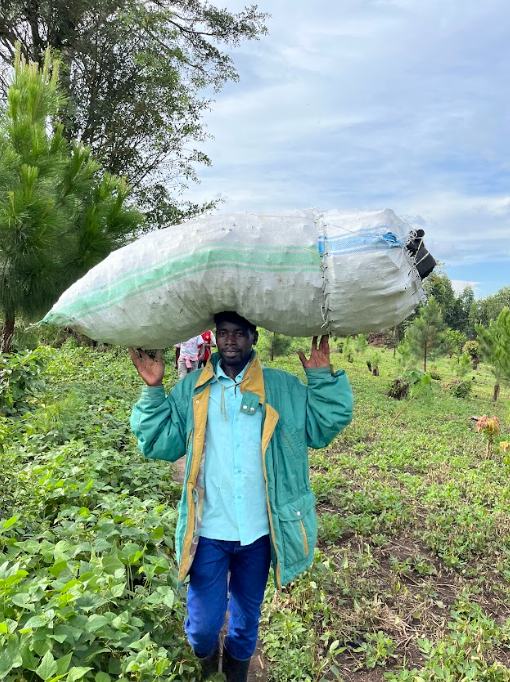
”We identify them, report them, and have even arrested some. But the next day they walk freely around the village and threaten CFM members.”
~ CFM treasurer Twebaze Enid.
NFA arbejder med begrænsede ressourcer og kan ofte ikke følge op på anmeldelser. Ansvar, der burde deles, ender derfor hos lokalsamfundet uden, at de har de nødvendige redskaber eller sikkerhed til at løfte opgaven.
A Sector in Transition and Rising Uncertainty
Uganda’s forestry sector is undergoing major restructuring. The NFA will be integrated into the Ministry of Water and Environment as part of national budget cuts, and no one yet knows what this will mean for future agreements or enforcement capacity.
“We don’t know what will happen to our agreements when the NFA is restructured,”
says CFM member Ndyabowe Johnson.
For the CFM group, this adds a new layer of uncertainty to an already difficult task. They have formal responsibility for protecting the forest but often lack the resources, clear boundaries, and enforcement needed to do so. The restructuring creates further doubt about how agreements and responsibilities will look in the future.
The forest is under pressure, and the local protectors are doing what they can—but without stable frameworks, their work becomes even more vulnerable.
Forests of the World’s Work
Amid this uncertainty, Forests of the World and partner organisation JESE are working to strengthen the CFM groups in Muhangi and other forest areas of western Uganda. The effort supports both daily patrol work and the development of stronger, more reliable frameworks for collaboration between communities and authorities.
The work ranges from supporting systematic monitoring and documentation of illegal logging to bridging communication gaps between CFM groups and the NFA when boundaries and responsibilities are unclear. At the same time, a growing regional network helps give the groups a stronger shared platform as they exchange experiences and engage in dialogue with authorities. This network is an important piece in the development of a connected biodiversity corridor—one where forests are protected by those who live closest to them.
At national level, Forests of the World advocates for more transparent and consistent forest governance, ensuring that co-management agreements not only exist on paper, but give communities real rights and practical support to protect the forest.
”We Will Not Give Up the Forest”
Despite threats, limited resources, and unstable frameworks, the CFM group in Muhangi continues its work. Every patrol, every report, and every dialogue is an attempt to keep the forest standing—even when circumstances make it difficult.
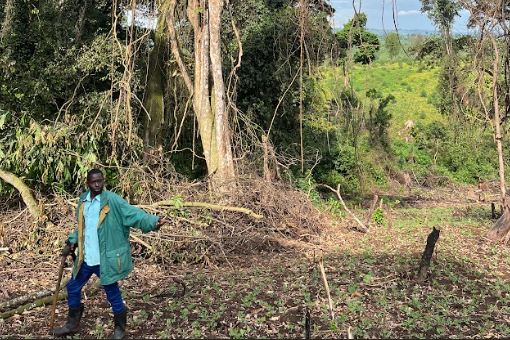
“We don’t always know what the next step is,” says treasurer Twebaze Enid. “But we will not give up the forest.”
In Muhangi, the struggle is about more than trees. It is about local rights, climate balance, and ensuring that the rules meant to protect the forest actually work in practice.
And perhaps that is exactly why the struggle continues: because the forest is still worth protecting, and because those who live closest to it have not lost hope.
Standing guard over the forest is not easy. But the CFM group in Muhangi persists—because they see what is being lost, and what can still be saved if the forest is allowed to stand.
Read our articles
Press Freedom Lives On. Just Not in Nicaragua
Record-Breaking Forest Fires Ravaged Bolivia in 2024

What Happens to Wildlife When Fire Reaches the Rainforest?

The Baru Nut Gets the Green Light