
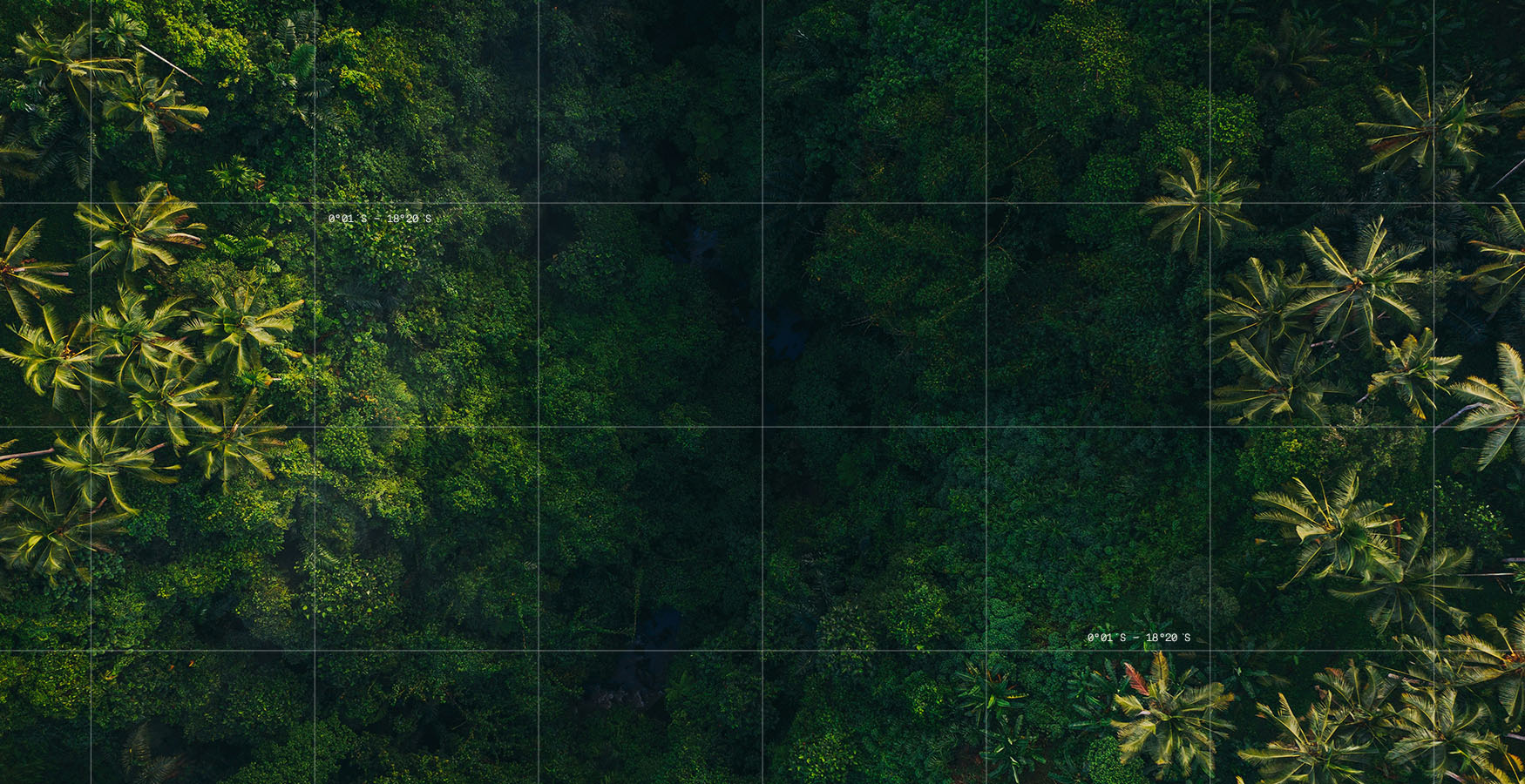

Local knowledge and technology protect some of the world’s most vital forests
Forest monitoring begins with the people, local communities, and organisations protecting and defending their territories.
When local knowledge is combined with satellite data and specific technologies, threats can be detected earlier and translated into action through five key steps.
These five steps require people, organisation, and the right equipment.

01. Monitoring forests & territories+
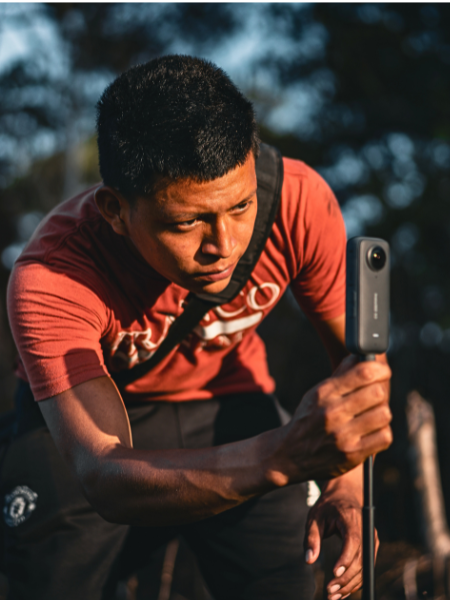
Local forest guardians continuously monitor their forests and territories. Satellite-based alerts help them quickly detect potential threats.

02. Documentation & verificcation +
Forest guardians investigate alerts in the field and document what is happening. Using GPS, photos, and observations, they confirm whether it is a real threat.

03. Analysis & collective decision-making +
Local communities and organisations analyse information from the monitoring and decide together how to best address the threats. This forms the basis for further action.

04. Communikation & advocacy +
Local communities share their knowledge and documentation with authorities and other relevant stakeholders. This strengthens dialogue and makes it easier to protect forests and territories in practice.

05. Action & protection +
Local communities translate knowledge and documentation into action. They prevent threats, protect their territories, and strengthen nature for the benefit of future generations.
MEET THE FOREST GUARDIANS
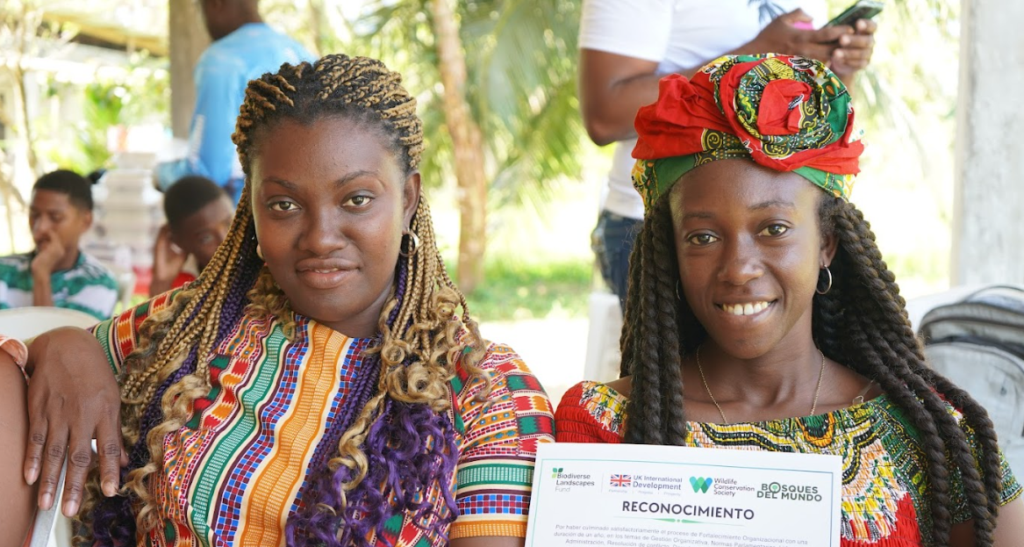
The forest guardians you meet here watch over some of the world’s last large intact forest landscapes and take action when the forests and territories are under threat.
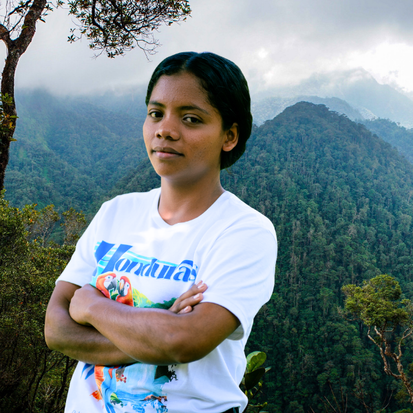
Ada watches over the forest and acts when nature is under threat
“We receive satellite alerts when there are fires or suspicions of illegal logging. That way, we detect it and act in time,” says Ada from Honduras.
Ada works in community-based forest monitoring in Honduras, where she, alongside other forest guardians, uncovers illegal deforestation and wildfires.
Using satellite data, mobile phones, and local knowledge, they can respond quickly whenever the forest is threatened.
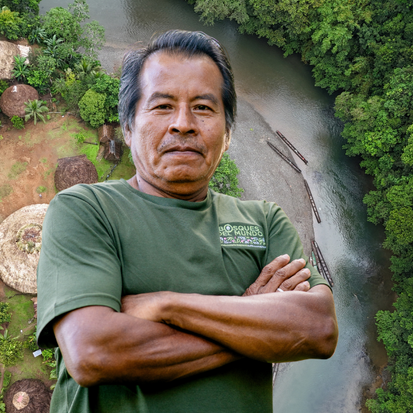
For Ultiminio, the forest is about more than nature
“Indigenous peoples face the same challenges in many places. Pressure on our territories and uncertainty surrounding our rights,” says Ultiminio from Panama.
When a notification about deforestation or fire comes in, Ultiminio and other young forest guardians try to respond quickly.Using satellite data, mobile phones, and local knowledge, they document threats to the forest and to the people who live in it.
But the monitoring is about more than technology. It is about the right to remain on one’s territory and protect it before it disappears.
The next guardians of the forest
What does the future of forest protection look like?
In Honduras, children and young people are learning to combine local knowledge with modern technology. The youth organisation Guaruma engages children and young people in nature conservation and forest monitoring. Through education, technology, and community, they gain both the knowledge and the tools to protect the forest around them.
In this short film, you meet some of the young people and educators who are part of this work. The film shows how a love for nature, local knowledge, and new technologies can go hand in hand in the fight against deforestation.
Explore the work of the forest guardians
Læs flere historier om, hvordan oprindelige folk og lokalsamfund bruger lokal viden, teknologi og organisering til at beskytte skove og territorier.

Why does this approach work?
Satellites, drones, and mobile apps can help detect fires, illegal logging, and other threats to the forest. But technology does not protect the forest on its own.
The real difference happens when local communities can turn knowledge into action—when they can investigate alerts,document threats, organise themselves, and make decisions about their territories.
That is why monitoring is not just about data. It is about empowering people so they can protect forests, nature, and their territories for future generations as well.
Indigenous peoples protect some of the world’s most important forests
Many of the forest areas that remain intact are located in or close to Indigenous territories. Here, local forest rangers protect both the forest and the communities that depend on it.
Intact forests store vast amounts of carbon, hold unique biodiversity, and are vital for water, climate, and livelihoods.Once destroyed, they are very difficult to restore.
A new report from the World Resources Institute points out that protected areas, effective enforcement of environmental laws, and Indigenous territories are among the most important reasons why more tropical primary forest was preserved in 2025 compared to the previous year.
This supports what we see through our partnerships: when Indigenous peoples and local communities are able to monitor, manage, and defend their territories, they can detect threats early and take action before deforestation, fires, and other encroachments escalate.

Q&A
Why are the last intact forests so important?
Intact forests are some of the world’s most valuable natural areas. They store large amounts of carbon, protect thousands of species, and allow nature to recover after destruction.
Why is monitoring the forest important?
Because you cannot protect what you cannot see. Deforestation, wildfires, and land grabbing often happen far from the attention of authorities. When local communities have access to monitoring, they can detect threats earlier and respond faster.
How does data turn into action?
Data does not protect the forest on its own. Satellite data and notifications are only the beginning. What is decisive is that local forest rangers can investigate, document, and organize action when a threat is detected.
Why are Indigenous peoples so important for forest protection?
For many Indigenous peoples, the forest is not merely a natural resource. It is home, culture, identity, and livelihood. Therefore, they often have a strong interest in protecting their territories for future generations. At the same time, research shows that forests in Indigenous territories are often better preserved than many other forest areas.
Why does Forests of the World work with Indigenous peoples?
Because they are often the forest’s strongest protectors. Many of the world’s best-preserved forests are located in Indigenous territories. Therefore, forest protection is not only about nature, but also about rights,organisation, and local leadership.
Why are the forests being cut down?
Deforestation is rarely caused by individuals alone. It is often driven by larger economic and political forces such as land grabbing, cattle ranching, agribusiness, mining, and weak governance. Therefore, forest protection is not only about monitoring the forest, but also about empowering the people and local communities who defend it.