Beneath the trees lies an opportunity
Baru fruits lie scattered across the grass. Some rest close to the trunk in the shade, others further out where the sun hits harder. Rosana Claudina Sampaio bends down to gather them together with her daughter. One by one, the hard shells drop into the basket.
Families in Brazil’s Cerrado have been collecting baru like this long before anyone started talking about value chains or international markets.
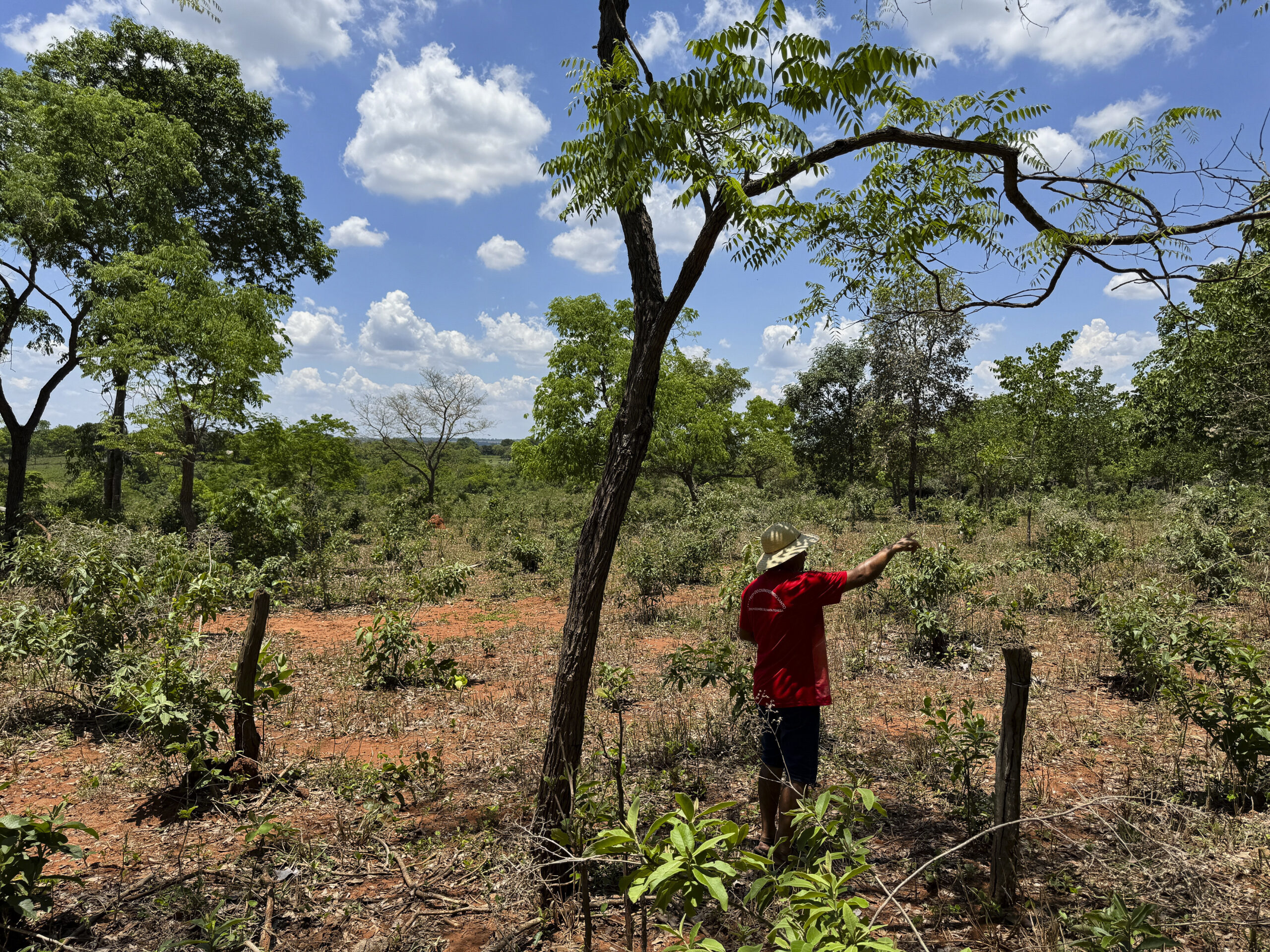
The baru tree is nothing new here. It is part of the landscape of the vast Brazilian wooded savannah, where drought-resistant trees, open grasslands and patches of low forest blend into one another. For the families who live here, baru is a familiar fruit — something to eat, share and sell when the season allows.
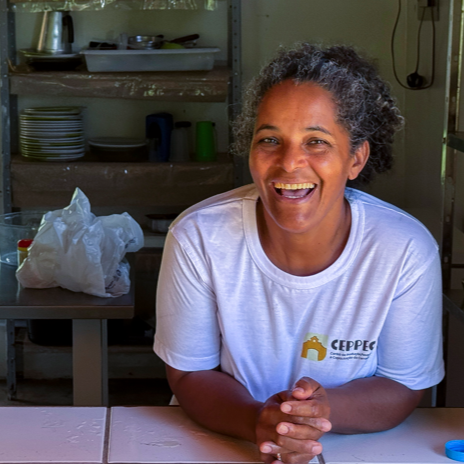
Baru has always been here. The trees are part of our daily lives, and we grew up collecting the fruits. What has changed is that we are now trying to build a future from something we once only used locally.
~ Rosana Claudina Sampaio, part of the leadership of CEPPEC.
That is perhaps the project’s most important starting point: not to invent something new, but to strengthen what already exists.
What is baru?
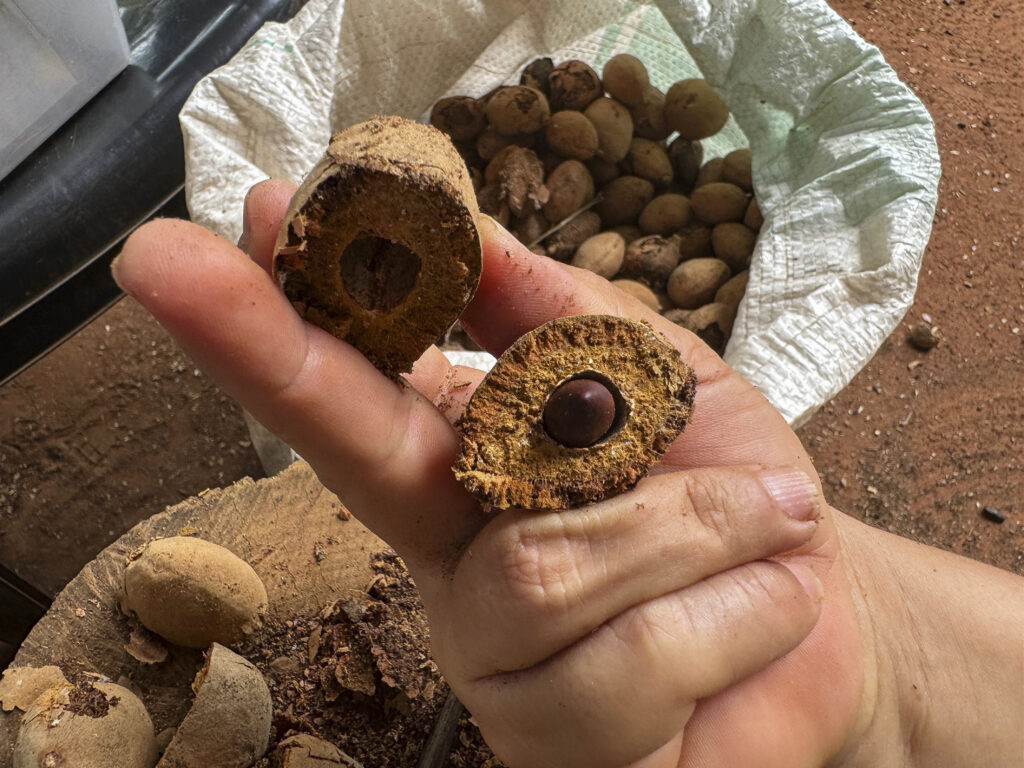
- Baru (Dipteryx alata) is a wild nut native to Brazil’s Cerrado.
- The nuts are harvested from trees already growing naturally in the landscape, meaning no forest needs to be cleared.
- Baru is rich in protein, fibre, magnesium and antioxidants.
- Together with CEPPEC, ECOA, Verdens Skove and the Danish company Nøddebazaren, work is underway to strengthen the value chain from local families to international markets.
A landscape shrinking year by year
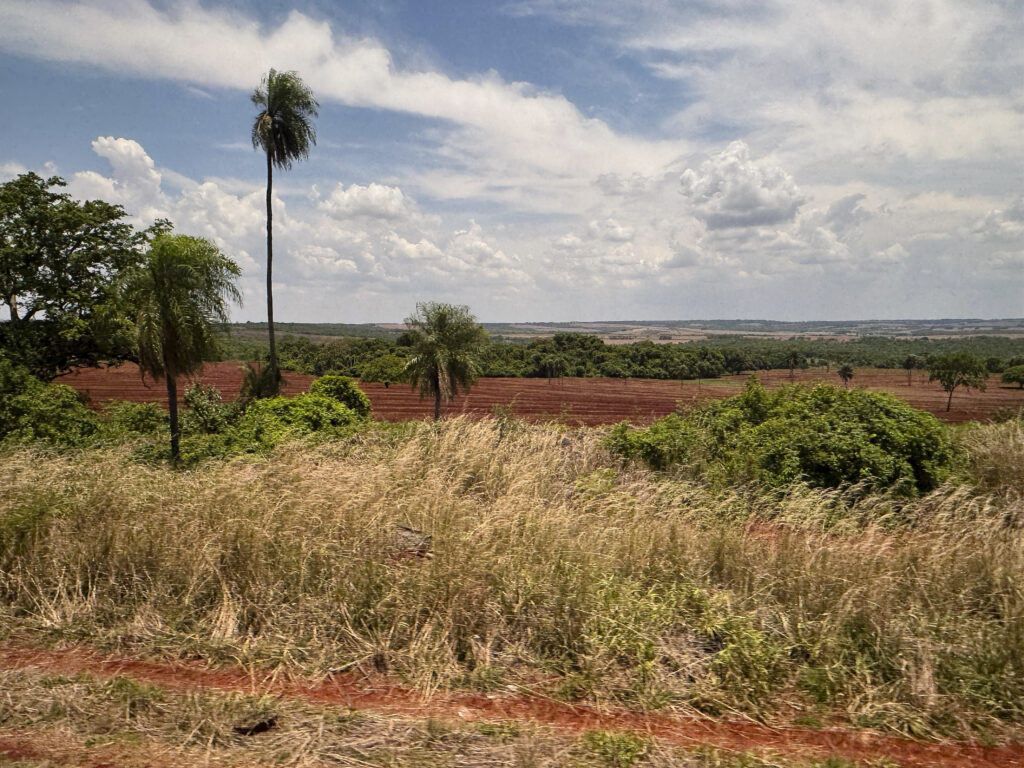
The Cerrado covers roughly one fifth of Brazil and is one of the most biodiverse savannah ecosystems in the world. Thousands of plant and animal species are found here, many of them nowhere else on Earth. But the Cerrado is also a landscape losing ground year after year.
More than half of its original vegetation has already been cleared. Over decades, soy production, sugar cane and cattle ranching have expanded across natural areas at a pace that has turned the region into one of South America’s most aggressively transformed agricultural frontiers.
That means more than fewer trees. It means fewer connected natural areas, more fragile soils, reduced water retention and less space for families whose livelihoods have long depended on the wild resources of the landscape.
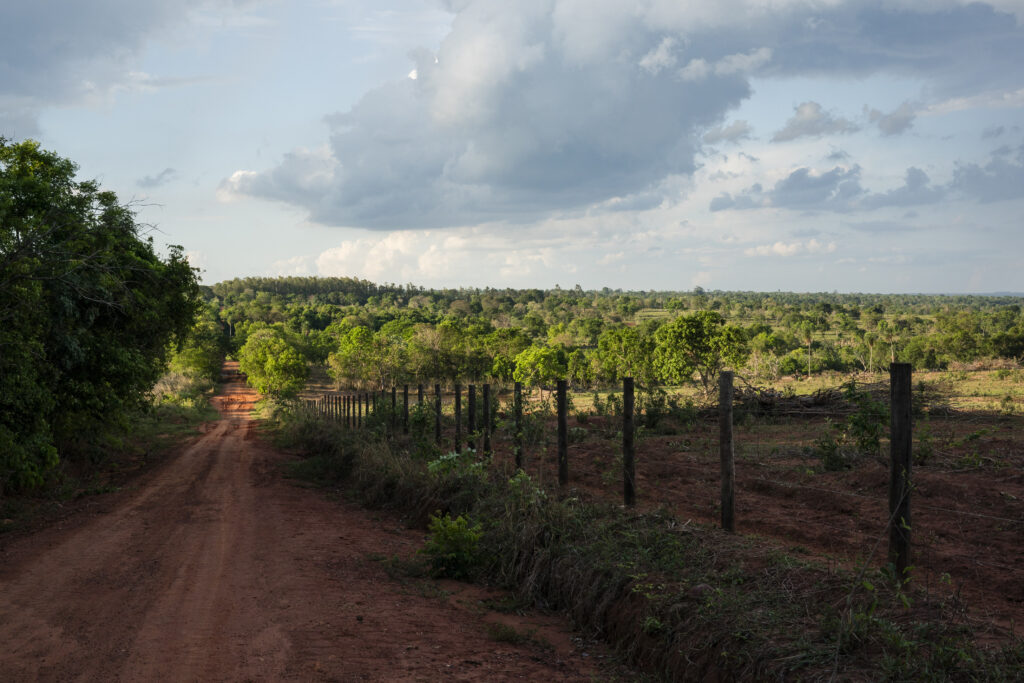
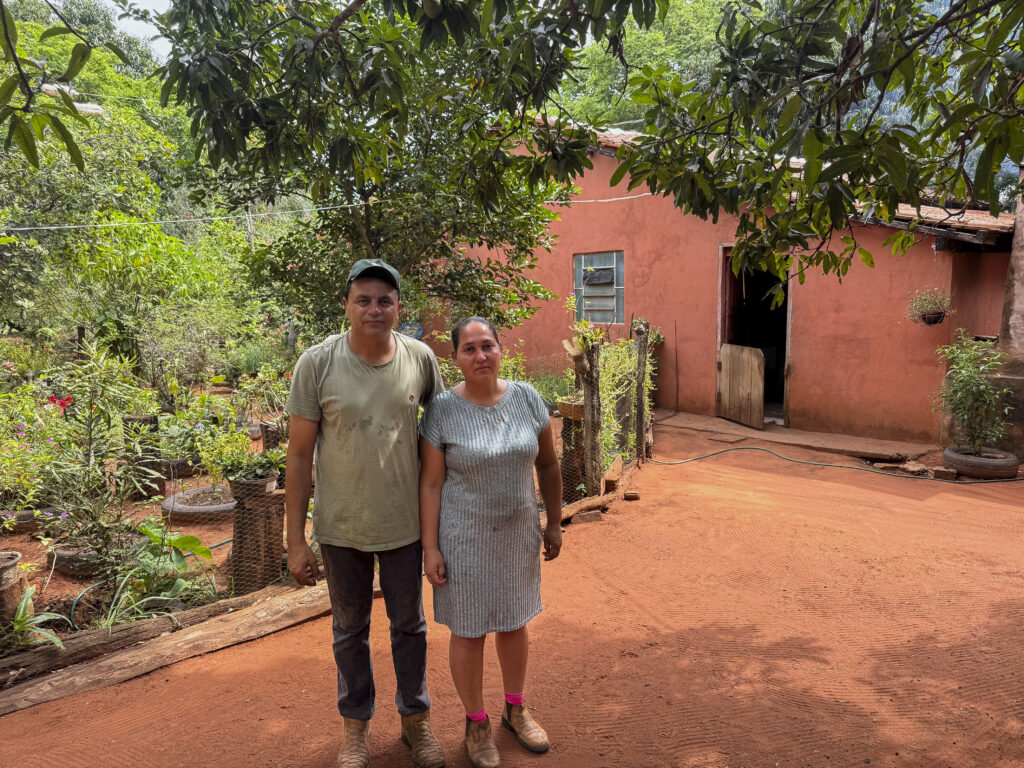
Rosana does not need satellite images to know the Cerrado is changing. She sees it in the growing distances between natural areas. In the fields spreading further into the landscape. In the uncertainty about what will remain.
If the trees disappear, we lose more than a harvest. We lose shade, water, fruit and part of the way we live.
~ Rosana Claudina Sampaio, CEPPEC
If nature only has value once it is cleared, it will continue to be cleared. But when it can also provide people with a future while still standing, the equation begins to change.
When a nut becomes a shared economy
Picking fruit from the ground is only the beginning. The difficult part comes afterwards.
On the left, Rosana Claudina Sampaio cracks baru nuts by hand. The work depends on rhythm, skill and years of practice.
Because a baru nut does not automatically become a stable source of income simply because it exists in the landscape. It must be collected in sufficient quantities, sorted, stored, processed and sold at a price that makes sense. Shared standards, quality control and collective organisation are all needed to prevent the work from falling back onto individual families alone.
That is the role CEPPEC is trying to fill.
The association grew out of women organising within the region. Women began meeting around crafts, natural resources and ideas for how families could create more stable livelihoods in the Cerrado.
It was also there that baru began to take on new meaning.
Once baru started generating income, families also began to see the trees differently. People stopped cutting down baru trees in grazing areas and instead started protecting them.
~ Rosana Claudina Sampaio, CEPPEC.
Today, the association brings together 54 families from 14 local communities around the harvesting of baru and other wild fruits. Work is organised collectively around storage, planning and sales so that more of the value can remain within the region.
When families work separately, it is difficult to create a stable income. When we organise together, we are stronger both in the market and in protecting our territory.
~ Rosana Claudina Sampaio, CEPPEC.
In partnership with the Brazilian organisation ECOA, Verdens Skove and the Danish company Nøddebazaren, the initiative is also helping strengthen areas families cannot manage alone: storage capacity, traceability, certification and access to new markets.
The aim is not simply to sell more nuts abroad, but to make baru a more stable part of local livelihoods.
It is slow work. Not because families lack experience with baru, but because markets rarely reward what grows slowly, varies naturally and depends on collective organisation.
What is allowed to remain standing
The baru tree is already rooted in the soil. It does not need to be planted in rows, sprayed with chemicals or artificially irrigated. Its value lies in the landscape that already exists.
That does not make baru a quick solution to the Cerrado’s challenges. The pressure from industrial agricultural expansion is far greater than what can be gathered in baskets beneath scattered trees.
But it does make the effort important. Conservation is rarely strong enough when it rests only on the desire to protect nature. It becomes stronger when people also have a real opportunity to remain in the landscape and make a living from it.
That is how Rosana sees the work of CEPPEC.
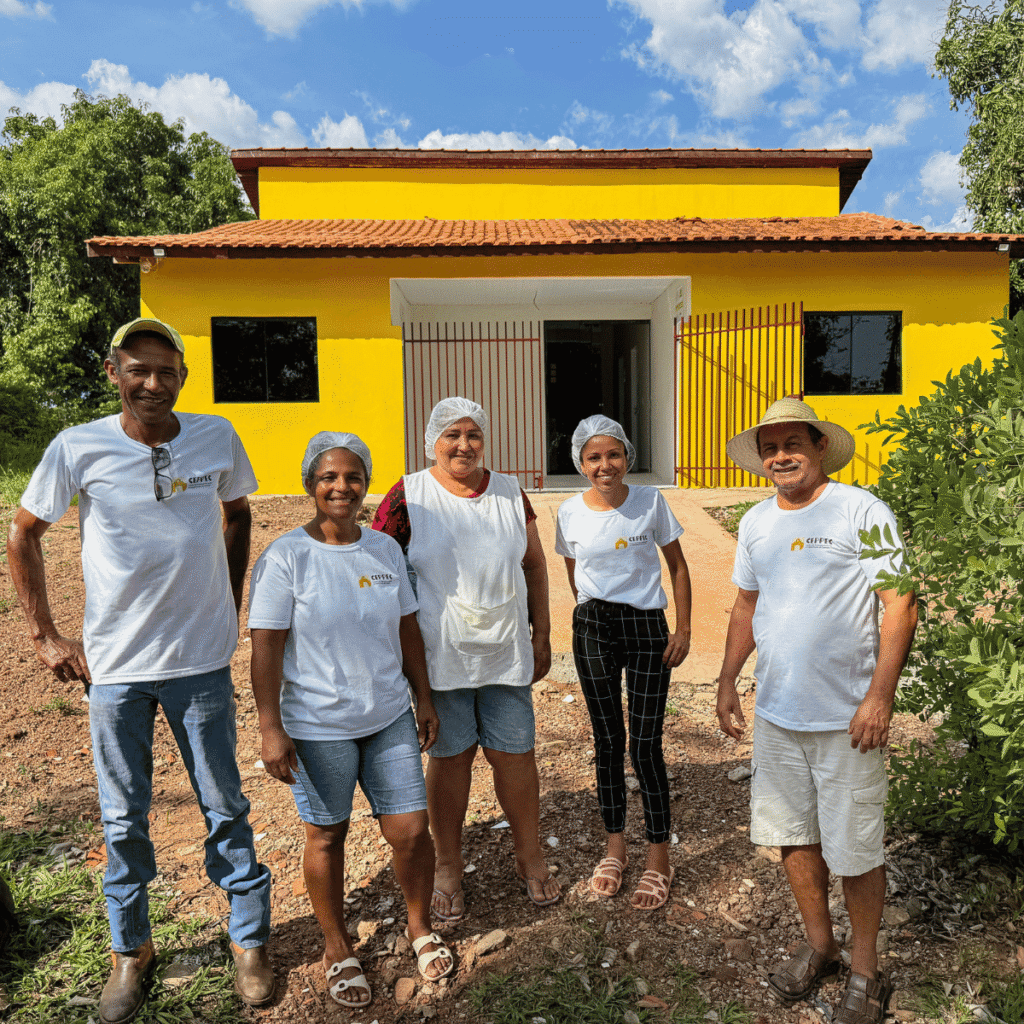
CEPPEC is not only about selling nuts. It is about making sure our children can stay here and see that it is also possible to make a living from the Cerrado without destroying it.
~ Rosana Claudina Sampaio, CEPPEC.
The baru initiative alone will not solve the major challenges facing the Cerrado. But it does show that conservation becomes stronger when local families also have better opportunities to live from — and help protect — the landscapes around them.
Beneath the baru trees, that work has already begun.
The article is based on interviews and collaboration with the association CEPPEC and with ECOA, Verdens Skove’s partner organisation in Brazil.
Who is CEPPEC?
CEPPEC is a local association in the state of Mato Grosso do Sul, Brazil, organising families around the harvesting, processing and sale of wild fruits from the Cerrado. The association works to strengthen local incomes, sustainable land management and collective access to markets.
Follow the work in Brazil’s Cerrado
Forests of the World works in partnership with local organisations to strengthen nature conservation, sustainable livelihoods and local leadership across some of the world’s most threatened forest landscapes.
More from the forests
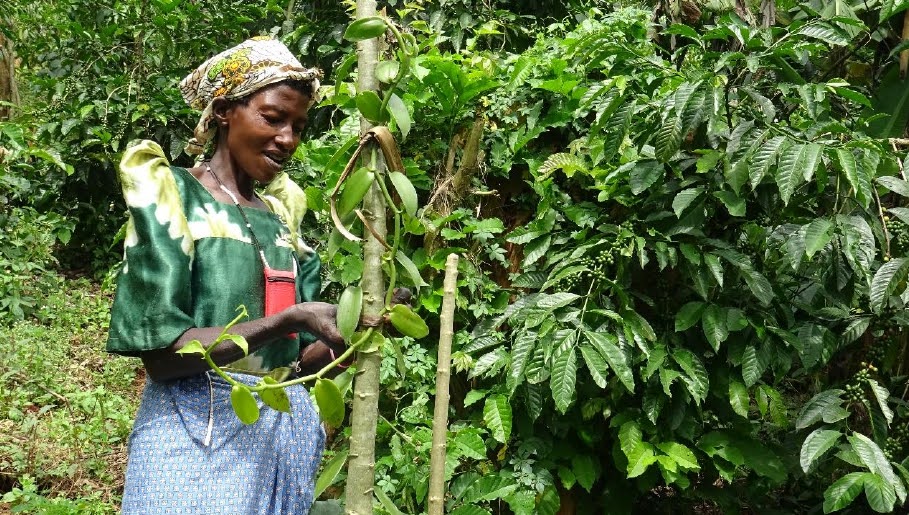
The Future of Forests Is Often Decided Outside the Forest
Ultiminio: “We are the guardians of the water”
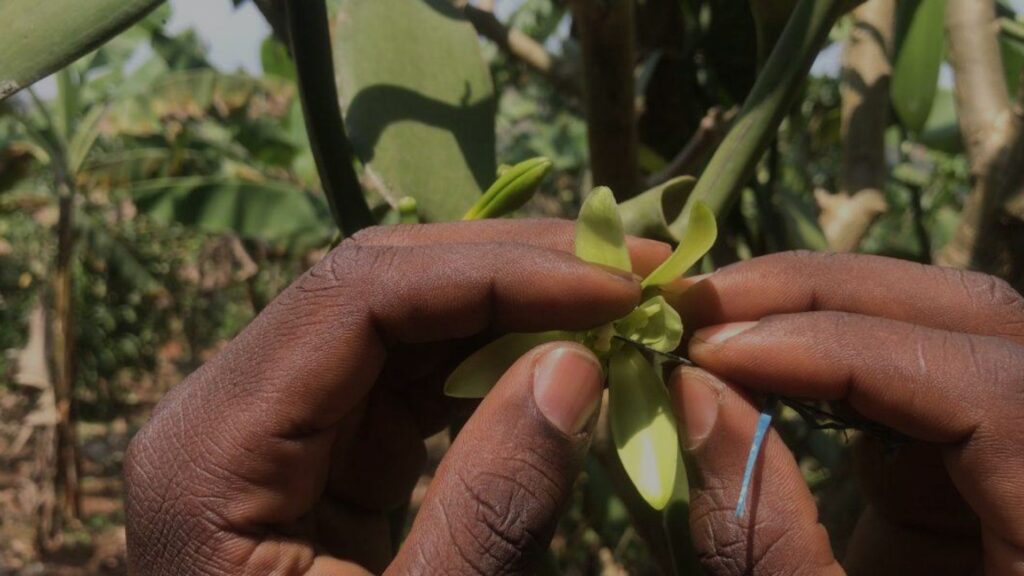
Sweet Returns: How Uganda’s Vanilla Farmers Went Organic and Doubled Their Income